Overview
A Canada-based car detailing and automotive service business specializing in premium vehicle enhancement services partnered with us to improve the performance and structure of their Meta Ads campaigns. The business offered a wide range of services including ceramic tinting, dash cam installation, ceramic coating, paint protection film (PPF), rust proofing, and professional car detailing.
When the project began in March, the company was already running Meta Ads campaigns, but the advertising ecosystem lacked a clear structure and performance tracking framework. There was limited visibility into which services were generating the best quality leads, which campaigns were actually profitable, and how much each lead was costing across different service categories. Additionally, there was no proper weekly or monthly reporting system in place, making it difficult for the business to evaluate advertising performance and make informed scaling decisions.
The primary objective was to build a structured Meta Ads ecosystem focused on creating predictable and consistent lead generation while improving reporting transparency and campaign visibility. The strategy also aimed to reduce overall cost per lead and provide service-wise performance insights so the business could clearly understand where advertising spend was producing the highest return.
The Challenge
Before optimization, the business faced multiple operational and marketing issues:
- No structured reporting system
- No weekly performance visibility
- Campaigns lacked proper categorization
- Difficult to identify profitable services
- No clear breakdown of spend vs lead generation
- Inconsistent cost per message
Although the business was spending significant monthly budgets, they could not accurately measure:
- Which campaigns were performing
- Which services were producing the highest ROI
- How efficiently Meta Ads budgets were being utilized
Strategy Implemented
1. Full Account Structure Optimization
The first step was restructuring the advertising account.
Campaigns were organized service-wise to create better visibility and optimization opportunities.
Major Service Categories Structured
- Ceramic Tint
- Dash Cam
- Ceramic Coating
- PPF
- Rust Proofing
- Car Detailing
This allowed the team to analyze:
- Cost per message by service
- Lead quality by service
- Best-performing creatives
- Revenue contribution per category
Reporting System Implementation
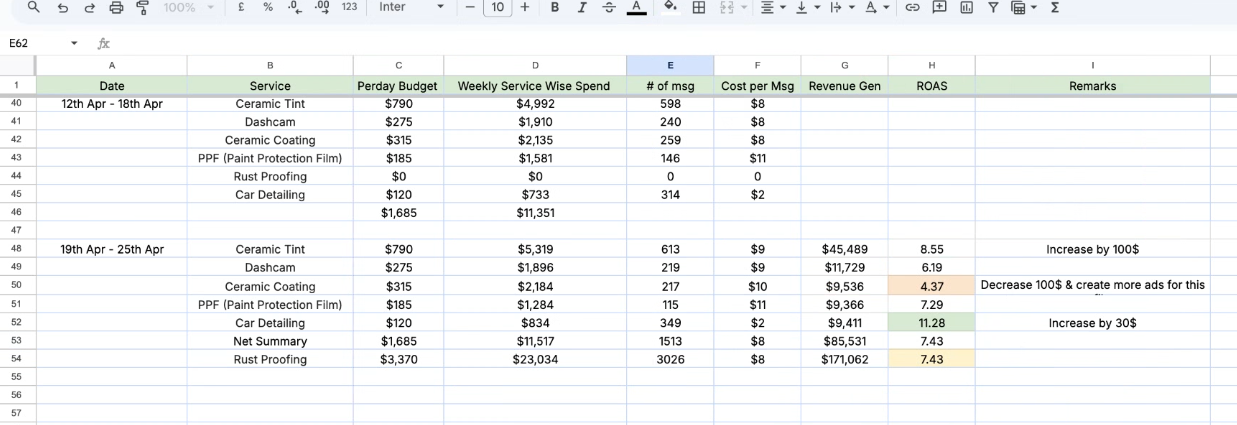
One of the biggest improvements introduced was a detailed reporting framework.
Before this system:
- The client did not receive clear weekly performance reports
- Spend tracking was inconsistent
- Lead tracking lacked transparency
After onboarding, the team implemented:
- Weekly performance reports
- Spend breakdown analysis
- Service-wise lead tracking
- Campaign-level reporting
- Cost-per-message monitoring
This gave the business a much clearer understanding of how advertising budgets were performing.
Campaign Optimization Approach
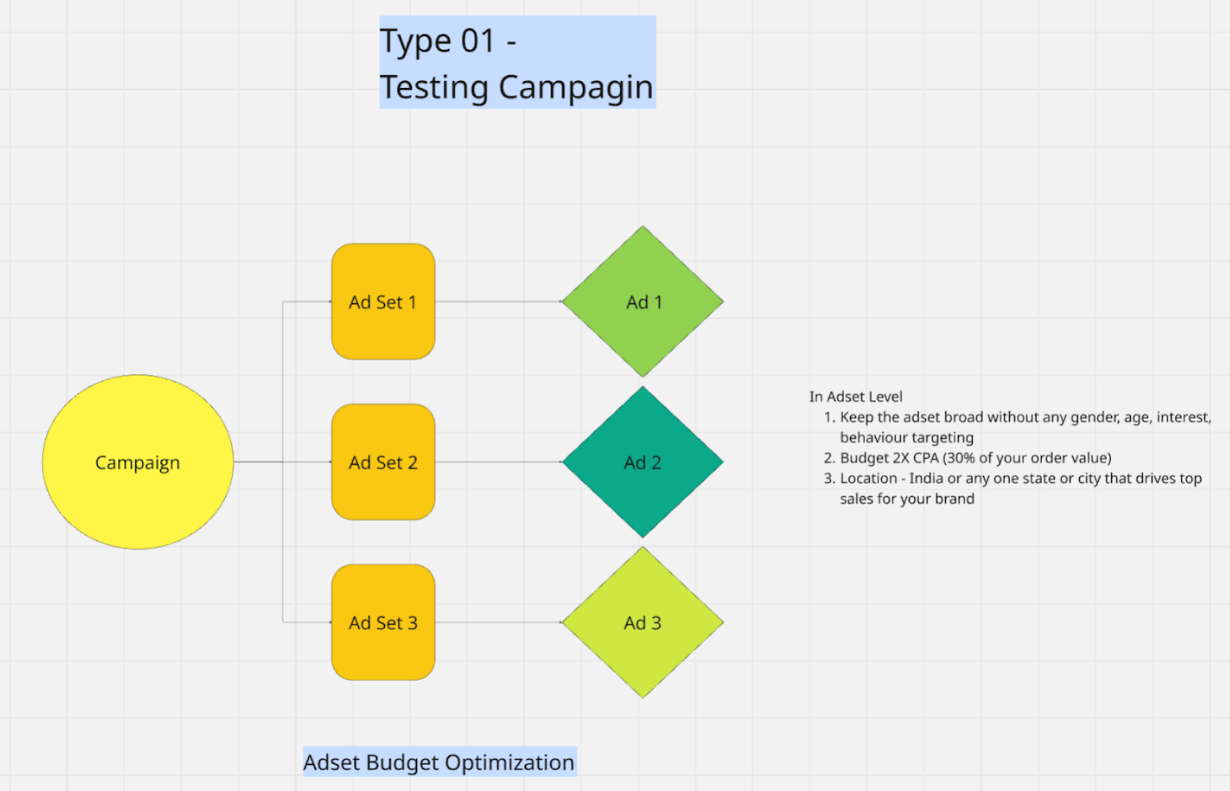
The account optimization focused on two major KPIs:
1. Account Structure
The campaigns were rebuilt in a way that allowed:
- Better segmentation
- Easier optimization
- Clear service-level reporting
- Faster scaling decisions
2. Cost Per Lead Optimization
The team focused aggressively on reducing messaging costs while maintaining lead quality.
Key Improvements
- Multiple creatives tested
- Service-specific campaigns launched
- Winning creatives scaled gradually
- Underperforming campaigns paused quickly
As the campaigns matured, the cost per message began improving steadily.
Creative Testing Framework
The campaigns followed a structured testing methodology.
Testing Included
- Individual creatives
- Different service offers
- Multiple messaging hooks
- Service-focused video creatives
- Offer positioning variations
The strategy was simple:
- Test single creatives independently
- Identify winners
- Scale only high-performing campaigns
Once winning ads were identified, budgets were increased gradually by controlled scaling percentages instead of aggressive jumps.
Campaign Performance
The account consistently managed an advertising spend of approximately $8,000 per month on Meta Ads, which was strategically distributed across multiple automotive service categories. Instead of concentrating the entire budget on a single offer, campaigns were segmented based on services such as ceramic coating, PPF, rust proofing, tinting, and detailing. This structured allocation allowed the business to identify which services were generating the highest-quality leads and delivering the best overall performance.
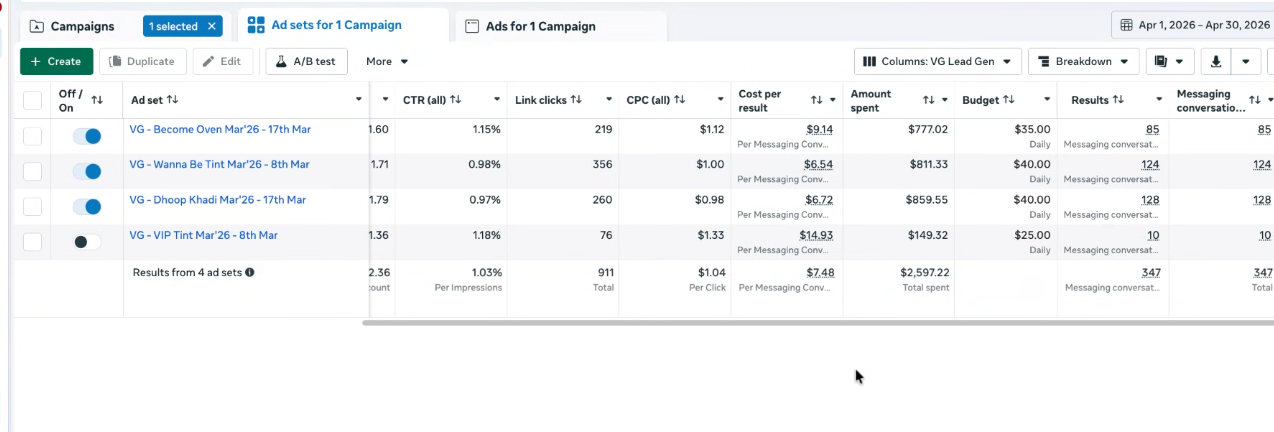
Across several campaigns, the average cost per message remained around $10–$11, creating a stable and predictable lead acquisition system for the business. However, through continuous creative testing and campaign optimization, certain campaigns significantly outperformed the account average.
One of the best-performing examples was the ceramic coating video campaign, which generated leads at approximately $6 per message — nearly half the average acquisition cost observed across other campaigns. The strong performance of these video creatives highlighted the importance of service-specific messaging, visual demonstrations, and targeted creative strategies in reducing lead costs while maintaining high-quality inquiries.
Revenue Performance
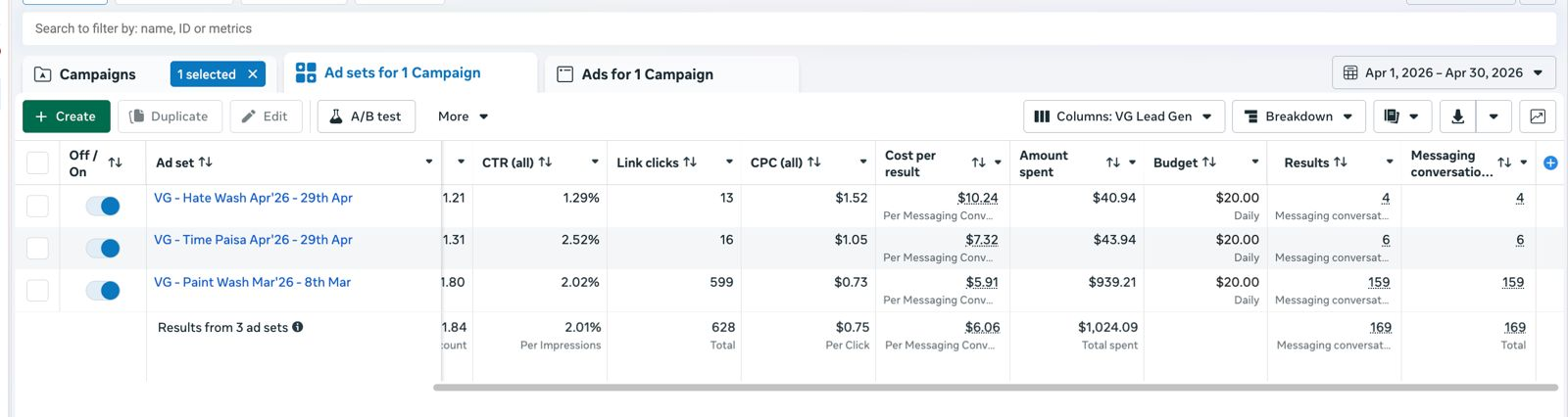
One of the most significant outcomes of the campaign was the substantial improvement in overall return on ad spend (ROAS). By implementing structured campaign optimization, service-level tracking, and weekly performance analysis, the business gained clear visibility into how advertising spend was contributing directly to revenue generation.
After analyzing campaign performance and business data consistently, the account achieved approximately 7.5X ROAS on overall ad spend. This demonstrated that the Meta Ads system was not only generating leads consistently but was also driving profitable business growth across multiple service categories.
In one performance snapshot, the business spent approximately $3,000 on Meta Ads and generated more than $17,000 in revenue. These results highlighted the impact of combining structured reporting, creative optimization, audience targeting, and performance-based scaling within a well-organized advertising framework. The campaigns evolved from simple lead generation efforts into a measurable and scalable revenue-driving system for the business.
Key Optimizations Applied
1. Service-Wise Campaign Segmentation
Instead of running generalized campaigns, every major service category was optimized separately.
This helped improve:
- Reporting accuracy
- Lead quality tracking
- Budget allocation decisions
- Scaling efficiency
2. Reporting Transparency
The introduction of weekly reporting helped the business understand:
- Where money was being spent
- Which services performed best
- Which campaigns required optimization
- Actual lead acquisition costs
This improved decision-making significantly.
3. Creative-Led Scaling
The account used a performance-first scaling framework:
- Test creatives individually
- Identify winners
- Scale gradually
- Maintain CPL consistency
This reduced wasted spend and improved campaign stability.
4. Data-Driven Optimization
Campaign decisions were made using:
- Cost-per-message analysis
- Weekly reporting
- Service-level breakdowns
- Performance trends
Instead of scaling blindly, every decision was backed by campaign data.
Results Achieved
Lead Generation
- Consistent flow of service inquiries
- Improved message quality
- Lower acquisition costs across key campaigns
Reporting Improvements
- Weekly performance visibility established
- Clear campaign tracking system implemented
- Better understanding of ROI by service
Revenue Growth
- Strong return on ad spend achieved
- 7.5X ROAS generated from Meta Ads
- Scalable lead generation framework built
Conclusion
This case study demonstrates how a structured Meta Ads system can transform a local automotive service business into a scalable lead generation engine. By focusing on proper account structure, service-level segmentation, weekly reporting systems, creative testing, and cost optimization, the business successfully improved lead quality, reduced acquisition costs, and achieved strong revenue growth through Meta Ads.
The implementation of a performance-driven advertising framework gave the business complete clarity on campaign profitability, service-wise lead generation, and return on ad spend. Instead of running campaigns without measurable insights, the brand was able to make data-backed decisions that supported consistent scaling and long-term growth.
If you’re running Meta Ads for your business and want to build a more predictable and profitable lead generation system, book a strategy call with our team to discover how we can help optimize your campaigns, improve lead quality, and scale your results efficiently.