Introduction
Launching performance marketing campaigns for a completely new brand is very different from scaling an already established business. When a brand has no previous advertising data, no pixel learning history, and no audience signals, the first objective is not aggressive scaling — it is structured validation.
This case study explains how we approached Meta Ads for Drink Salts, a new brand entering the digital space without prior ad performance history. Instead of chasing short-term vanity results, we followed a systematic creative testing framework designed to identify early winners and validate market response.
Within the first testing cycle, we successfully identified two high-potential creatives — one video and one static image — and achieved approximately 1X return on ad spend, which represents strong early validation for a brand starting from zero.
This project demonstrates our structured experimentation methodology and our ability to build performance foundations for new brands entering the D2C ecosystem.
Client Background
Drink Salts entered the market as a new product category participant without previous Meta Ads activity. The brand had:
- No historical ad performance data
- No validated audience segments
- No tested creatives
- No conversion learning signals
- No clarity on messaging direction for paid traffic
Because of these limitations, the first campaign phase was intentionally designed as a testing framework rather than a scaling campaign.
Our goal during this stage was simple and strategic:
Identify what works before deciding how to scale.
Campaign Objective
Unlike mature brands that aim for immediate profitability from performance campaigns, early-stage brands require validation first.
The primary campaign objectives were:
- Test multiple creative directions
- Identify early audience engagement patterns
- Establish baseline performance benchmarks
- Discover at least one winning creative angle
- Reach break-even performance during the testing phase
Achieving these goals allows brands to move confidently into scaling mode later.
Strategy Overview
Viral Groww – Statics Production
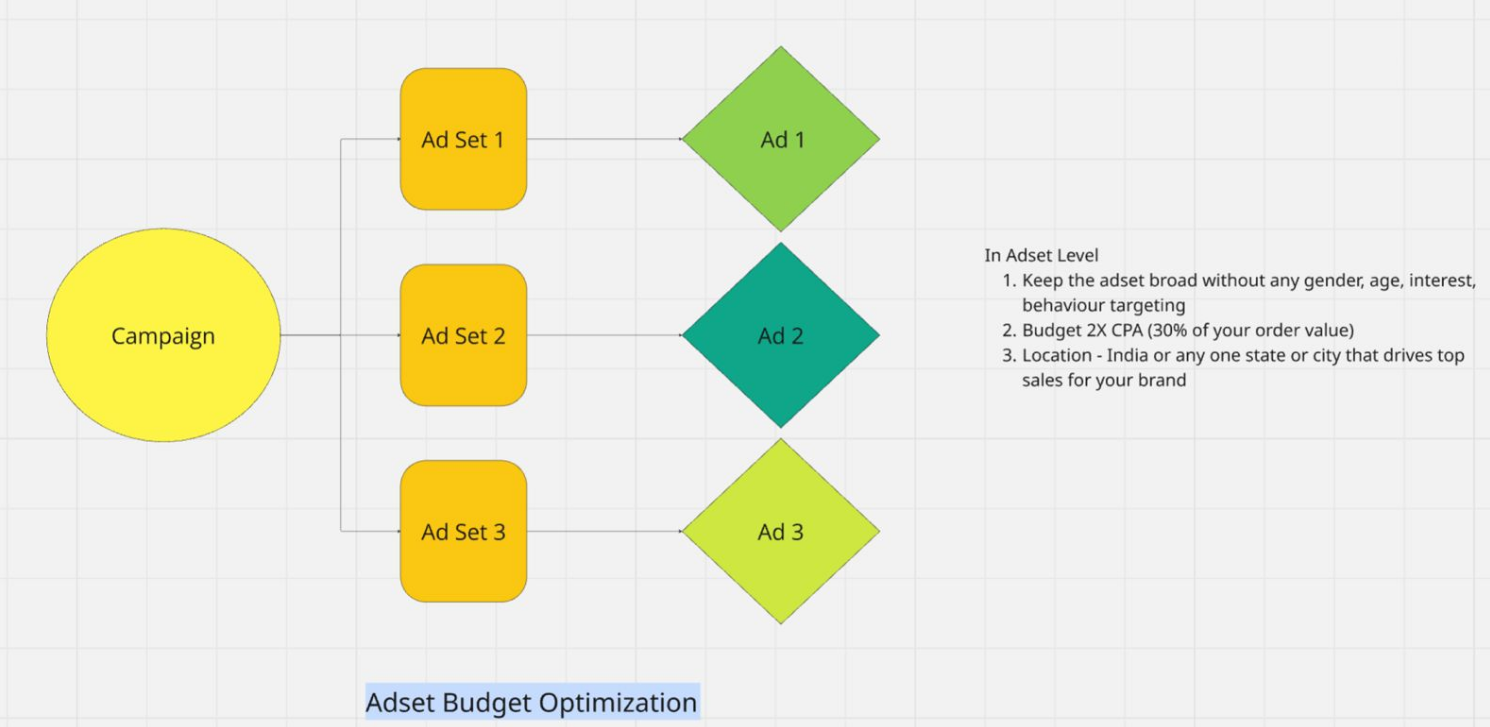
Since Drink Salts had no advertising history, we implemented a creative-first testing strategy rather than a targeting-heavy strategy.
Many advertisers make the mistake of adjusting targeting repeatedly during early campaigns. Instead, we focused on identifying strong communication angles first.
Our strategy followed three structured layers:
Phase 1: Market Entry Testing
The first step was to introduce the product to the audience through controlled experimentation. During this phase:
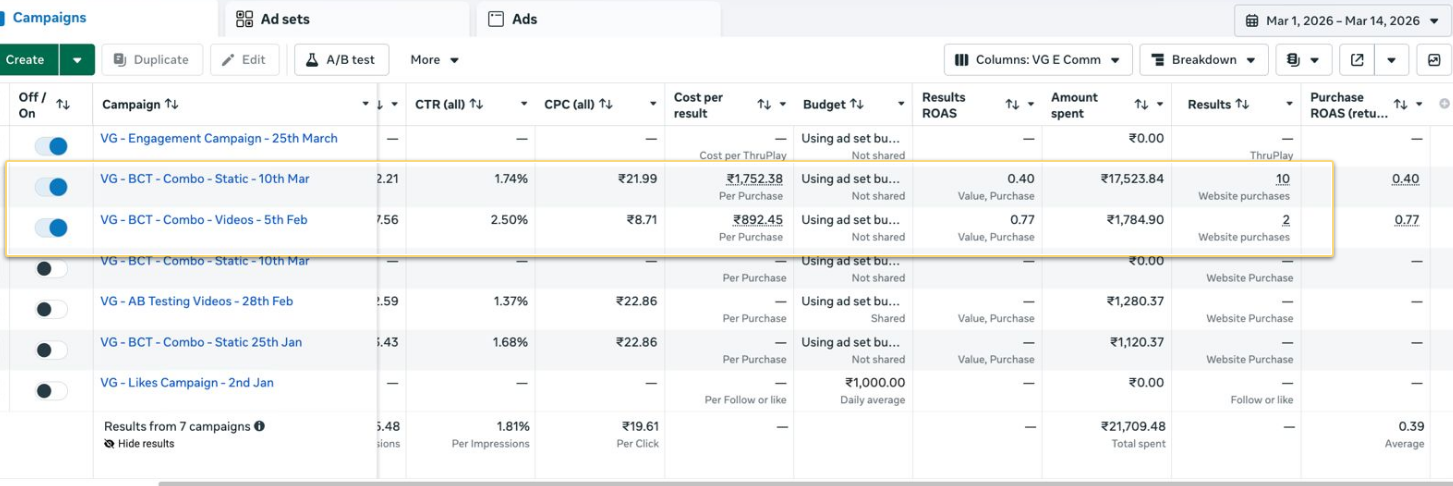
- Multiple creatives were tested
- Messaging styles were evaluated
- Hook variations were explored
- Static and video formats were compared
The goal was not immediate profitability. The goal was signal collection.
Phase 2: Creative Performance Identification
After the initial testing phase, we carefully analyzed key performance indicators such as click behavior, engagement signals, cost patterns, and conversion intent indicators to understand how the audience was responding to the ads.
Based on performance signals, we identified two strong creative performers:
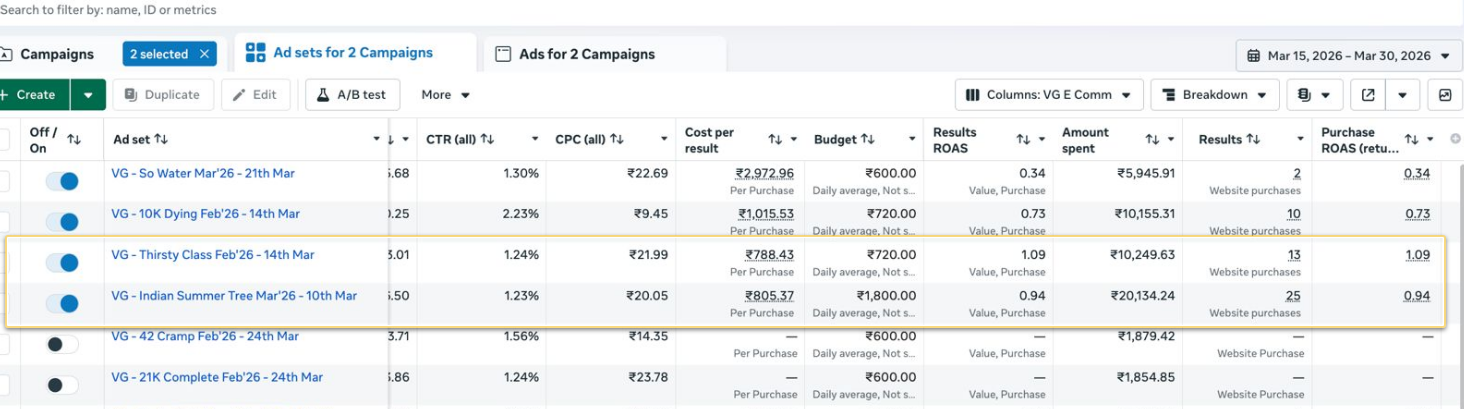
✔ One video creative
✔ One static image creative
During the testing phase, the campaign generated early learning data with a small number of website purchases and an average cost per purchase of approximately 0.60, while the total spend remained controlled at around 5.63. Although the results were from an early-stage testing cycle, these creatives clearly stood out compared to others and became the foundation for further optimization and scaling in the next phase of the campaign
Phase 3: Break-Even Validation
Once the winning creatives were identified, campaigns began stabilizing toward performance efficiency.

At this stage:
The campaign achieved approximately 1X ROAS, meaning the campaign recovered its advertising cost during early testing itself.
For a brand with zero ad history, this represents strong validation.
Why This Result Matters for a New Brand
Break-even performance is often misunderstood.
Many people expect immediate profitability from performance marketing. However, for new brands, the real success indicator is identifying what works.
Reaching break-even performance during the first testing cycle means:
- the product has demand signals
- messaging direction is correct
- audience response is positive
- scaling becomes predictable
This transforms advertising from experimentation into strategy.
Creative Testing Framework Used
Instead of launching a single campaign and hoping for results, we followed a structured testing system. Our creative testing workflow included the following steps:
Step 1: Audience Understanding
Before launching campaigns, we studied the potential audience profile.
We focused on:
- customer intent level
- lifestyle positioning
- usage behavior assumptions
- problem awareness stage
This helped us design communication angles aligned with real customer thinking.
Step 2: Messaging Hypothesis Development
Rather than guessing what might work, we created structured messaging hypotheses.
Each creative tested a different positioning approach such as:
- problem awareness
- benefit explanation
- product introduction
- curiosity-driven engagement
This ensured the campaign generated useful learning signals.
Step 3: Creative Format Testing
We intentionally tested multiple formats because different audiences respond differently to different content styles.
The formats tested included:
- short-form video creatives
- static visual creatives
- direct messaging creatives
- simple product explanation creatives
This helped us understand format preference patterns.
Step 4: Structured Campaign Launch
Instead of launching high-budget campaigns immediately, we used controlled testing budgets to evaluate performance signals safely.
This approach allowed:
- efficient learning
- reduced risk exposure
- better creative comparison
- faster optimization decisions
Controlled testing is essential when working with new brands.
Step 5: Performance Signal Analysis
After campaigns started running, we carefully tracked performance behavior rather than reacting emotionally to early numbers.
We evaluated:
- engagement trends
- click patterns
- conversion intent indicators
- cost efficiency variations
These signals helped identify which creatives deserved scaling attention.
Winning Creative Identification
After the first testing cycle, two creatives clearly stood out:
Winning Creative 1: Video Creative
The video creative performed strongly because it delivered:
- authentic communication
- product clarity
- engagement-friendly storytelling
- stronger attention retention
Video content often performs better during early testing phases because it builds trust faster.
Winning Creative 2: Static Image Creative
Interestingly, one static creative also showed strong performance signals.
This indicated:
The audience responded well not only to storytelling but also to simple visual clarity.
Static creatives are valuable because they are:
- faster to produce
- easier to scale
- efficient for testing variations
Identifying both a video and a static winner gave the campaign flexibility for future scaling.
Campaign Performance Outcome
Within the testing window, the campaign achieved approximately:
1X Return on Ad Spend
This means the campaign reached break-even performance during early experimentation.
For an early-stage brand, this result confirms:
✔ product interest exists
✔ messaging direction is correct
✔ creatives are working
✔ scaling potential is strong
Break-even testing success reduces long-term marketing uncertainty.
Conclusion
The Drink Salts campaign demonstrates how structured experimentation can build strong advertising foundations for a completely new brand.
Instead of chasing aggressive early scaling, we focused on identifying performance signals through a systematic testing framework. Within the first testing cycle, we successfully identified two winning creatives and achieved break-even performance — a strong indicator of market readiness.
This case study highlights our ability to support brands during their most critical stage:
the transition from uncertainty to validated performance direction.
By combining creative experimentation, structured testing, and signal-based optimization, we helped Drink Salts establish a reliable starting point for long-term performance marketing growth.