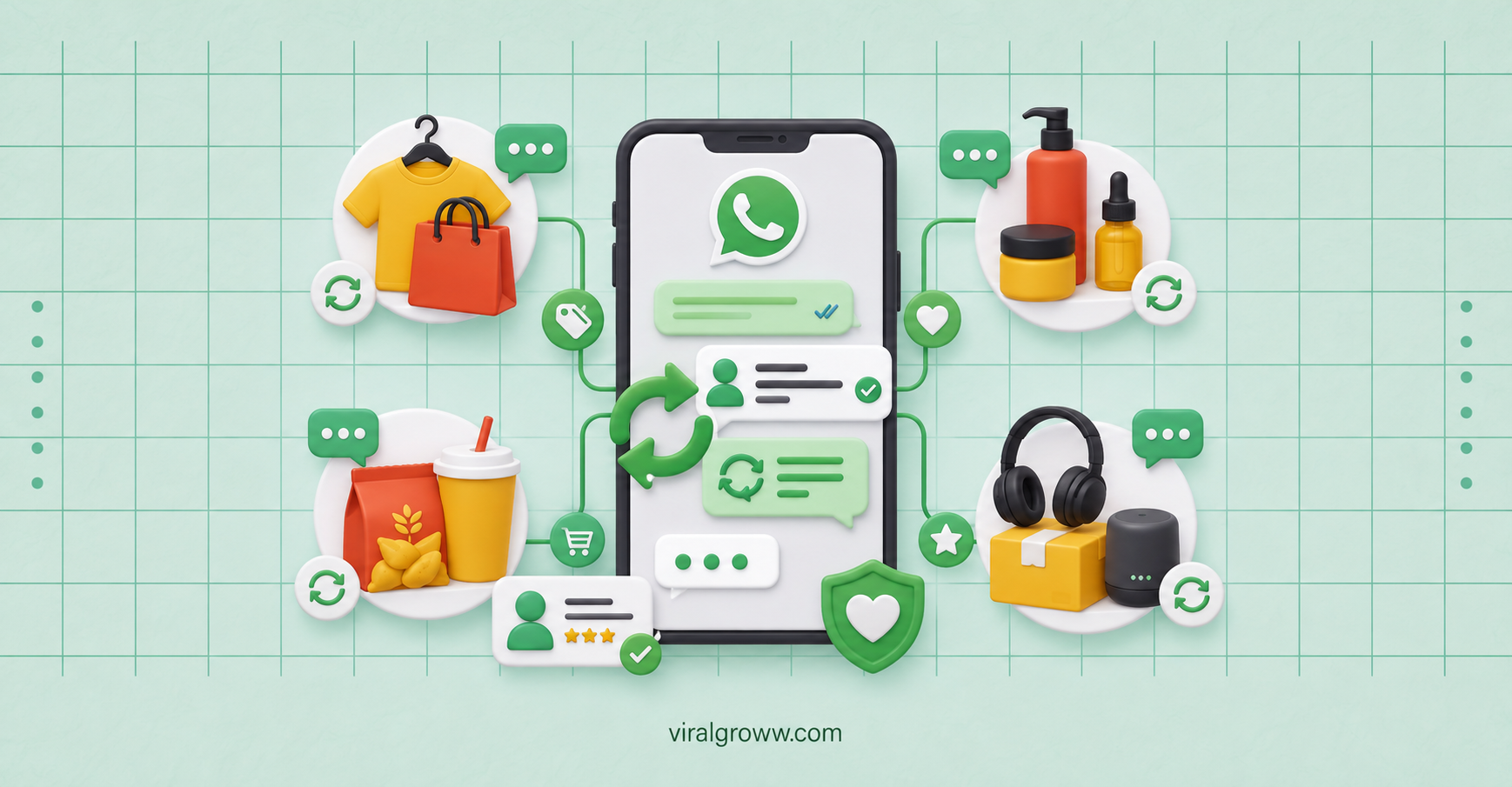
One of the biggest mistakes D2C brands make is assuming that a single WhatsApp marketing strategy works for every business. In reality, every niche has a different customer journey, buying behavior, and purchase frequency. A skincare customer doesn’t shop like someone buying fashion apparel, and a home décor buyer behaves very differently from a customer purchasing nutritional supplements. That’s why your WhatsApp retention strategy should always be customized according to your niche instead of following a one-size-fits-all approach.
Fashion & Apparel Brands
Fashion brands operate in a fast-moving industry where customers constantly look for new styles, seasonal collections, and trending products. For these brands, WhatsApp should focus on product discovery rather than repeated discounts. Instead of sending generic promotional messages, brands should notify customers about new arrivals, back-in-stock products, festive collections, and personalized style recommendations based on previous purchases. If someone recently bought a shirt, recommending matching trousers or accessories creates a much more natural shopping experience than randomly promoting unrelated products.
Food & Beverage Brands
Food and beverage businesses depend heavily on repeat purchases, making retention far more valuable than constantly acquiring new customers. Instead of waiting for customers to remember your brand, WhatsApp can automatically remind them when it’s time to reorder. Subscription offers, refill reminders, loyalty rewards, and festive combo packs help increase purchase frequency while reducing customer acquisition costs. These timely reminders ensure customers return before they run out of the product or switch to another brand.
Skincare & Beauty Brands
Skincare products usually require consistent usage before customers notice visible results. Because of this, education becomes one of the strongest retention tools. Brands should use WhatsApp to share skincare routines, product usage tips, refill reminders, and complementary product recommendations. Instead of simply asking customers to buy another serum, educate them on why combining it with sunscreen or moisturizer delivers better results. This approach builds trust, positions your brand as an expert, and naturally increases Customer Lifetime Value (CLV).
Home Décor Brands
Home décor brands generally have higher Average Order Values (AOV) but longer buying cycles. Their WhatsApp strategy should focus on inspiration rather than urgency. Sharing room styling ideas, seasonal collections, product pairing suggestions, and home makeover inspiration keeps customers engaged between purchases. Someone who recently purchased a decorative mirror might also be interested in matching wall lights or accent décor. Personalized recommendations like these improve cross-selling opportunities without making the communication feel overly promotional.
Use AI to Create High-Converting WhatsApp Messages
Writing fresh WhatsApp campaigns every week can become time-consuming as your customer base grows. AI tools like ChatGPT, Claude, and Gemini can significantly reduce this effort by generating personalized message ideas, abandoned cart reminders, cross-sell campaigns, festive promotions, and customer engagement flows. However, AI performs best when you provide complete information about your brand, products, pricing, target audience, and communication style instead of asking for generic marketing messages.
The quality of your prompt directly impacts the quality of the output. Include details such as your product category, average selling price, brand personality, customer pain points, and campaign objective. This allows AI to generate messaging that feels much closer to your brand voice.
Never Publish AI Copy Without Editing
While AI is excellent for generating ideas, it should never replace human judgment. Every WhatsApp message should be reviewed before it reaches customers. Add your brand personality, personalize product names, adjust offers, simplify language, and make the conversation feel natural. Customers should feel like they’re receiving a helpful message from your brand—not an automated marketing blast. The more human your communication feels, the higher your engagement and conversion rates will be.
Build Your Automation Around Customer Behavior
Successful WhatsApp retention isn’t about sending more messages—it’s about sending the right message at the right time. Every automation should be triggered by customer behavior instead of fixed schedules. Whether someone abandons a cart, completes a purchase, leaves a review, or becomes inactive for several weeks, each action should activate a relevant communication flow. This makes your marketing feel personalized and significantly improves customer experience.
When customers receive timely and relevant messages throughout their buying journey, they’re much more likely to trust your brand, make repeat purchases, and recommend your products to others. That’s the real power of a well-planned WhatsApp retention strategy.
Frequently Asked Questions
1. What is WhatsApp retention marketing?
WhatsApp retention marketing is a strategy that helps D2C brands engage existing customers through personalized WhatsApp messages. It focuses on recovering abandoned carts, encouraging repeat purchases, collecting reviews, and increasing customer lifetime value instead of only acquiring new customers.
2. Which WhatsApp automation flows should every D2C brand implement?
Every D2C brand should set up essential automation flows such as Abandoned Cart Recovery, Post-Purchase Follow-up, Review & Referral Requests, Cross-Sell and Upsell Campaigns, Win-Back Campaigns, Festival Promotions, and Welcome or Pop-up Nurture Flows. These automations help increase repeat sales while reducing customer acquisition costs.
3. How can WhatsApp marketing increase repeat purchases?
WhatsApp helps brands stay connected with customers through timely and personalized communication. Sending reorder reminders, product recommendations, exclusive offers, and post-purchase support encourages customers to return and buy again, ultimately improving customer retention and lifetime value.
4. Can AI tools like ChatGPT or Claude help create WhatsApp marketing campaigns?
Yes. AI tools such as ChatGPT, Claude, and Gemini can help generate personalized WhatsApp messages, automation flows, promotional campaigns, and customer engagement sequences. However, every message should be customized to match your brand voice and customer expectations before sending.
5. What are the biggest mistakes to avoid in WhatsApp retention marketing?
The most common mistakes include sending too many promotional messages, using generic broadcast content, ignoring customer segmentation, failing to personalize messages, and not tracking key metrics like delivery rate, click-through rate, repeat purchase rate, and conversion rate. A successful WhatsApp retention strategy focuses on sending the right message to the right customer at the right time.