Introduction
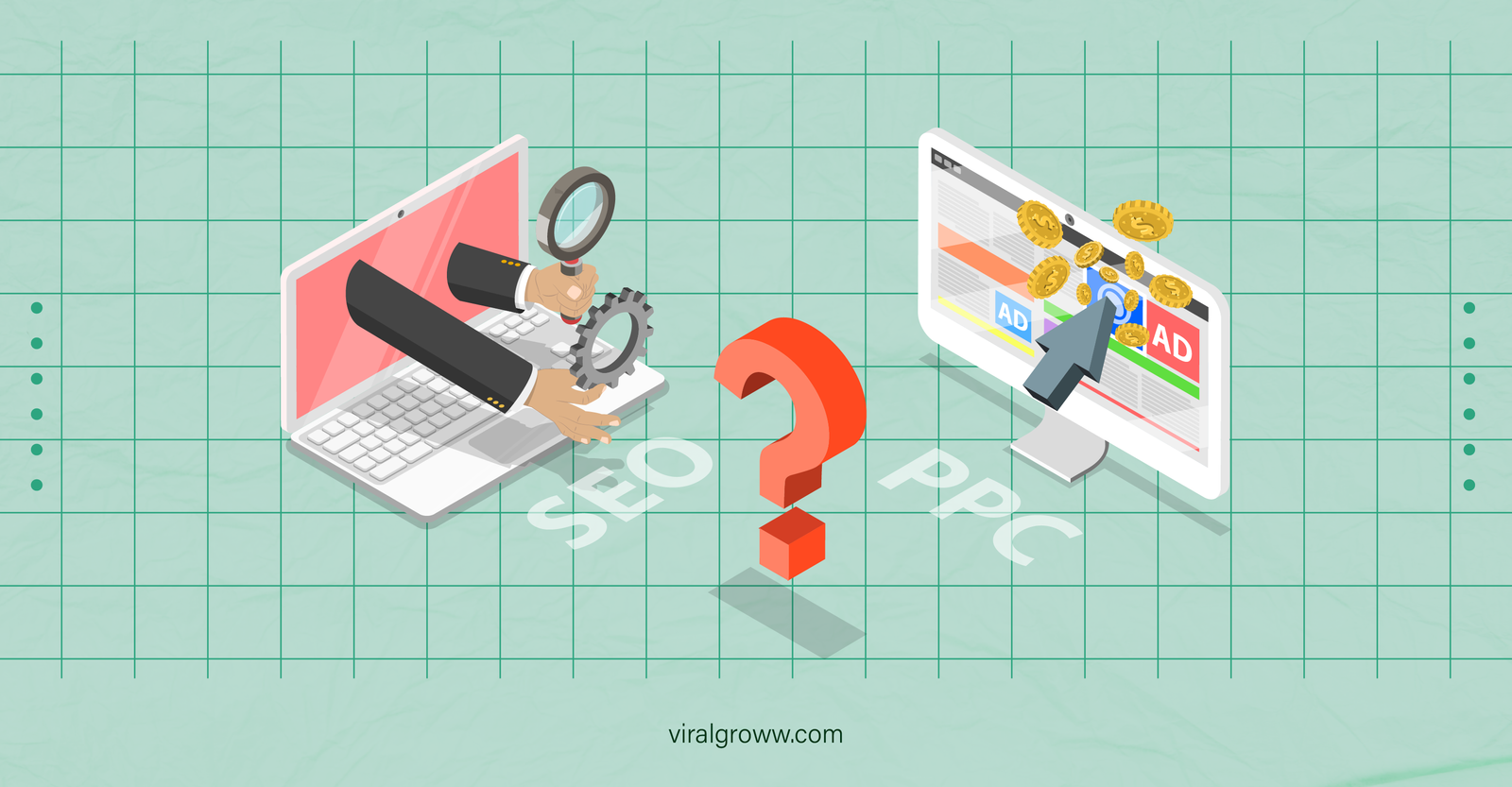
Many business owners ask themselves, “Is PPC better than SEO?” when planning their digital marketing strategy. This question doesn’t have a simple yes or no answer because both pay-per-click advertising and search engine optimization serve different purposes and work best in different situations.
The truth is that both PPC and SEO are powerful tools for driving traffic to your website. However, choosing between them depends on your business goals, budget, timeline, and target audience. In this complete guide, we’ll break down everything you need to know about PPC vs SEO to help you make the right choice for your business.
Understanding PPC and SEO
What is PPC?
PPC (Pay-Per-Click) is a form of online advertising where you pay a fee each time someone clicks on your ad. These ads appear at the top of search engine results pages, on social media platforms, and on various websites. Google Ads is the most popular PPC platform, but you can also use Bing Ads, Facebook Ads, and other platforms.
When you run PPC campaigns, you bid on specific keywords related to your business. When someone searches for those keywords, your ad may appear. You only pay when someone actually clicks on your ad, which is why it’s called “pay-per-click.”
What is SEO?
SEO (Search Engine Optimization) is the practice of improving your website to rank higher in organic search results. Unlike PPC, you don’t pay for each click. Instead, you invest time and resources into creating quality content, improving your website’s technical aspects, and building authority through backlinks.
SEO focuses on making your website more attractive to search engines like Google. When done correctly, your website pages will appear higher in search results when people look for products or services related to your business.
PPC vs SEO: Key Differences
Understanding the main differences between PPC and SEO will help you decide which approach works better for your business:
Speed of Results
- PPC: Results appear almost immediately after launching campaigns
- SEO: Takes 3-6 months to see significant results, sometimes longer
Cost Structure
- PPC: Direct cost per click, budget control is immediate
- SEO: Ongoing investment in content, tools, and expertise
Visibility Duration
- PPC: Visibility stops when you stop paying
- SEO: Long-term visibility that continues even when you reduce efforts
Click Rates
- PPC: Typically gets 2-5% of total clicks on search results
- SEO: Organic results get 95-98% of total clicks
Control Level
- PPC: Complete control over ad appearance, targeting, and budget
- SEO: Limited control over how search engines display your content
When PPC Works Better Than SEO
There are specific situations where PPC delivers better results than SEO:
1. New Business Launch
When you’re launching a new business or website, PPC can drive immediate traffic while your SEO efforts build momentum. You can’t wait 6 months for organic traffic when you need customers right now.
2. Seasonal Campaigns
If your business has seasonal peaks (like holiday sales or summer services), PPC allows you to quickly scale up during high-demand periods and scale down when demand drops.
3. Specific Geographic Targeting
PPC excels when you need to target specific locations. If you’re a local business or want to test new markets, PPC’s geographic targeting is more precise than SEO.
4. Product Launches
When introducing new products, PPC can generate immediate awareness and sales while you build SEO content around the new offerings.
5. Competitive Keywords
In highly competitive industries where ranking organically is extremely difficult, PPC might be your best option to compete for valuable keywords.
6. Testing and Validation
PPC is perfect for testing which keywords, messages, and landing pages work best before investing in long-term SEO strategies.
When SEO Outperforms PPC
SEO often provides better long-term value in these situations:
1. Limited Budget
If you have a small marketing budget, SEO typically offers better long-term return on investment. While the upfront work is significant, ongoing costs are lower than continuous PPC spending.
2. Informational Content
When people are looking for information rather than ready to buy, they’re more likely to click on organic results. SEO works better for educational content and building trust.
3. Long-term Growth
SEO builds compound value over time. Each piece of content you create can continue driving traffic for years, making it more cost-effective in the long run.
4. Brand Authority
Ranking high in organic search results builds more trust and credibility than paid ads. People often trust organic results more than advertisements.
5. Content Marketing Strategy
If your business relies on content marketing to educate and nurture prospects, SEO integrates naturally with this approach.
Working with Viral Groww can help you get the most value from your budget. As a performance marketing agency in India, Viral Groww understands how to balance PPC and SEO investments for maximum return.
Timeline and Results
PPC Timeline
- Week 1: Campaign setup and launch
- Week 2-4: Initial optimization and improvements
- Month 2-3: Refined targeting and better performance
- Ongoing: Continuous optimization and scaling
SEO Timeline
- Month 1-2: Keyword research and content planning
- Month 3-4: Content creation and technical improvements
- Month 4-6: First significant ranking improvements
- Month 6-12: Substantial traffic growth
- Year 2+: Strong organic presence and authority
Benefits of PPC
Immediate Results
PPC campaigns can start driving traffic within hours of launch. This is crucial when you need quick results or have time-sensitive promotions.
Precise Targeting
You can target users based on:
- Keywords they search for
- Geographic location
- Age, gender, and interests
- Device type
- Time of day
- Previous website visits
Budget Control
With PPC, you have complete control over your spending. You can set daily budgets, maximum cost-per-click limits, and pause campaigns instantly if needed.
Measurable ROI
PPC platforms provide detailed analytics showing exactly how your money is spent and what results you’re getting. You can track conversions, revenue, and return on ad spend precisely.
Testing Opportunities
PPC allows you to test different:
- Ad copy variations
- Landing pages
- Targeting options
- Bidding strategies
Competitive Advantage
You can compete for top positions even against larger competitors with stronger SEO presence.
Benefits of SEO
Long-term Value
Once your content ranks well, it can continue driving traffic for years without additional costs. This creates compound value that PPC cannot match.
Higher Trust and Credibility
Organic search results typically receive more trust from users. People often skip ads and focus on organic results, especially for informational searches.
Better Click-Through Rates
Organic results receive the majority of clicks on search results pages. The top organic result typically gets 25-30% of all clicks.
Cost-Effective Traffic
While SEO requires upfront investment, the long-term cost per visitor is typically much lower than PPC.
Brand Awareness
Ranking for multiple keywords increases your brand visibility across various search terms related to your industry.
Content Marketing Integration
SEO works perfectly with content marketing strategies, helping you build authority and educate your audience.
Combining PPC and SEO for Maximum Results
The best digital marketing strategies often combine both PPC and SEO. Here’s how they work together:
1. Keyword Research Synergy
Use PPC data to identify high-converting keywords for SEO content. Conversely, use SEO keyword research to find new PPC opportunities.
2. Landing Page Optimization
Test landing pages with PPC traffic, then apply the winning elements to your organic landing pages.
3. Brand Domination
Appear in both paid and organic results for your most important keywords to dominate the search results page.
4. Seasonal Strategy
Use PPC for immediate seasonal campaigns while building SEO content for long-term seasonal traffic.
5. Remarketing Integration
Use SEO content to attract visitors, then use PPC remarketing to re-engage them with targeted ads.
Viral Groww specializes in integrated digital marketing strategies. As both an ecommerce marketing agency and SEO agency in Delhi, they can help you create a balanced approach that maximizes your results.
Industry-Specific Considerations
E-commerce
E-commerce businesses often benefit from both PPC and SEO:
- PPC for product promotions and seasonal sales
- SEO for category pages and product descriptions
- PPC for competitive product keywords
- SEO for informational content and buying guides
Local Services
Local service businesses typically see better results from SEO:
- Local SEO for “near me” searches
- Google My Business optimization
- PPC for immediate lead generation
- SEO for building local authority
B2B Companies
B2B companies often need longer sales cycles:
- SEO for educational content and thought leadership
- PPC for specific solution-focused keywords
- SEO for building industry authority
- PPC for event promotion and lead generation
SaaS and Technology
Technology companies benefit from both approaches:
- SEO for complex buying journeys
- PPC for competitor comparisons
- SEO for technical content and tutorials
- PPC for free trial promotions
Common Mistakes to Avoid
PPC Mistakes
- Setting up campaigns without proper keyword research
- Ignoring negative keywords
- Not testing ad copy variations
- Poor landing page experiences
- Inadequate conversion tracking
- Not adjusting bids based on performance
SEO Mistakes
- Focusing only on keyword rankings instead of traffic and conversions
- Creating content without understanding search intent
- Ignoring technical SEO issues
- Not optimizing for mobile users
- Neglecting local SEO opportunities
- Building low-quality backlinks
Strategic Mistakes
- Choosing PPC or SEO without considering business goals
- Not allocating enough budget for either strategy to be effective
- Expecting immediate results from SEO
- Not tracking the right metrics
- Giving up too early on either strategy
Measuring Success
PPC Success Metrics
- Click-through rate (CTR): Percentage of people who click your ads
- Cost per click (CPC): Average amount you pay per click
- Conversion rate: Percentage of clicks that result in desired actions
- Cost per acquisition (CPA): Cost to acquire one customer
- Return on ad spend (ROAS): Revenue generated per dollar spent
SEO Success Metrics
- Organic traffic growth: Increase in visitors from search engines
- Keyword rankings: Positions for target keywords
- Pages per session: How many pages visitors view
- Bounce rate: Percentage of visitors who leave after viewing one page
- Backlink growth: Number and quality of sites linking to you
- Conversion rate: Percentage of organic visitors who convert
Combined Strategy Metrics
- Total search visibility: Combined presence in paid and organic results
- Customer lifetime value: Long-term value of customers from each channel
- Brand awareness metrics: Branded search volume and mentions
- Market share: Your visibility compared to competitors
Future Trends in 2026
Artificial Intelligence Impact
AI is changing both PPC and SEO:
- PPC: Automated bidding and ad optimization are becoming more sophisticated
- SEO: AI-powered content creation and optimization tools are improving
- Both: Voice search and AI assistants are creating new opportunities
Privacy and Tracking Changes
Changes in privacy regulations affect both strategies:
- PPC: Third-party cookie restrictions are changing targeting options
- SEO: First-party data becomes more valuable
- Both: Focus on building direct relationships with customers
Search Engine Evolution
Search engines continue evolving:
- Visual search: Images and videos become more important
- Featured snippets: Zero-click searches impact both PPC and SEO
- Local search: Location-based results become more prominent
Integration Opportunities
The line between PPC and SEO continues to blur:
- Unified reporting: Better tools for tracking combined performance
- Cross-channel optimization: Using insights from one channel to improve the other
- Automation: AI helps manage both strategies simultaneously
Conclusion
So, is PPC better than SEO? The answer depends entirely on your specific situation, goals, and resources. PPC excels when you need immediate results, have a sufficient budget, and want precise control over your marketing efforts. SEO works better for long-term growth, building brand authority, and maximizing return on investment over time.
Most successful businesses use both strategies together. PPC can drive immediate traffic and test what works, while SEO builds long-term organic growth and brand credibility. The key is finding the right balance for your business.
Consider these factors when making your decision:
- Timeline: How quickly do you need results?
- Budget: What can you afford to spend monthly?
- Competition: How competitive is your market?
- Resources: Do you have time to invest in SEO?
- Goals: Are you looking for quick wins or long-term growth?
Whether you choose PPC, SEO, or both, the most important thing is to start with a clear strategy and realistic expectations. Both approaches require expertise, ongoing optimization, and patience to deliver the best results.
If you’re still unsure which approach is right for your business, consider working with a digital marketing agency that specializes in both PPC and SEO. Viral Groww can help you develop a comprehensive strategy that combines the best of both worlds to achieve your business goals.
Ready to get started? Contact Viral Groww today to discuss which strategy will work best for your business and how to implement it effectively.