Introduction: The Real Problem Most D2C Brands Face
Scaling a D2C brand is easy on paper but difficult in reality. Most brands manage to increase revenue, but they struggle to stay profitable while scaling.
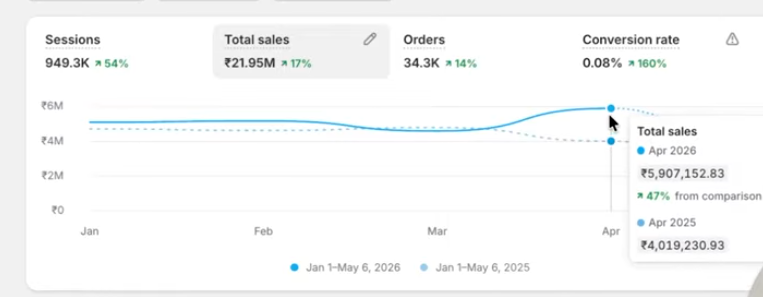
This was exactly the situation with Dharishah Ayurveda. The brand was already stable at around ₹50 lakh monthly revenue, but every attempt to scale beyond that created instability in ad performance.
The challenge was simple but critical — how do we scale without killing profitability?
The Starting Point: Stable Revenue, Unstable Scaling
For almost a year, the brand stayed in a tight range of ₹45L to ₹53L monthly revenue. The performance was consistent, but not scalable in a profitable way.
The key problems were not about traffic or demand. The real issues were deeper:
The biggest issue was that winning ads were not consistent. A few creatives performed well, but they quickly stopped working. When we tried to scale them, performance dropped immediately.
There was no reliable system to consistently produce new winning creatives. This created a dependency on a small set of ads, which made scaling risky.
Every time we increased budgets, the system broke. ROAS dropped, CPA increased, and performance became unpredictable.
The Core Shift: We Stopped Thinking About Targeting
The biggest breakthrough came when we completely changed our approach.
Instead of focusing on audience targeting, demographics, and interest stacking, we shifted fully to a content-led Meta Ads strategy.
We started believing one simple principle:
On Meta, creative is targeting.
If the content is strong, Meta itself finds the right audience. This removed the dependency on complex targeting structures and allowed us to focus entirely on creative performance.
Building the Creative Testing System
To scale properly, we first needed a system to consistently identify winning ads. So we built a structured testing framework.
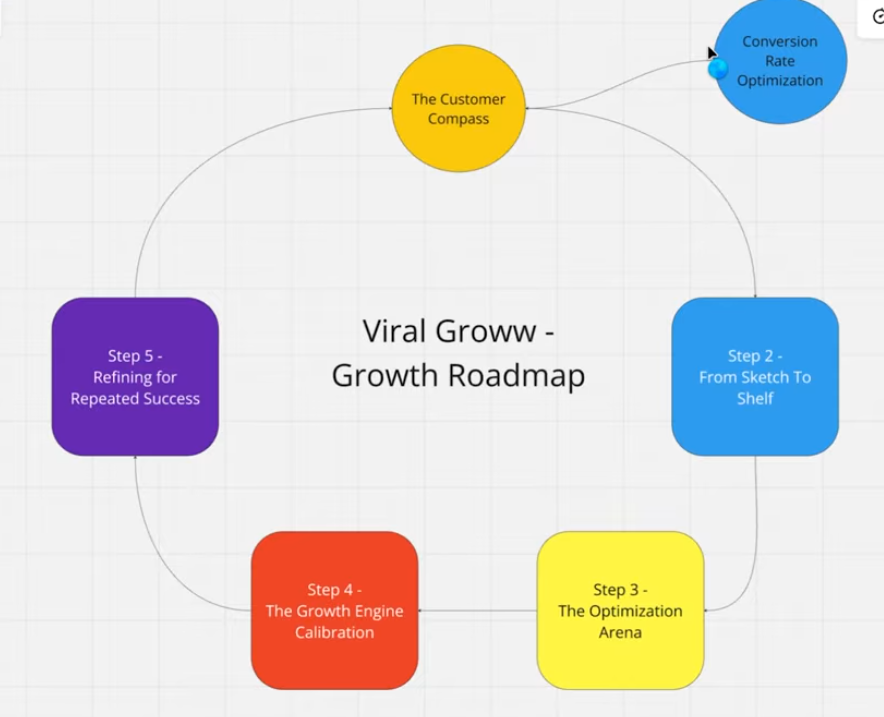
We used a Broad Creative Testing (BCT) approach where every ad was treated like an independent experiment. Each creative was tested under a broad audience with controlled budgets.
Both static creatives and video ads were tested continuously. The goal was not perfection — the goal was speed and clarity.
Every creative was judged using simple performance signals like CTR, Add to Cart rate within the first few days, landing page clicks, and cost per purchase. This helped us quickly understand whether an ad had potential or not.
If a creative showed early weakness, it was paused quickly. If it showed strong early signals, it was marked as a winner and prepared for scaling.
The Budget Strategy That Made Testing Efficient
We followed a very simple budgeting logic to avoid wasting money during testing.
The average cost per acquisition for the brand was around ₹450–₹500. So we allocated testing budgets at roughly 2X of CPA per ad set, which came to around ₹900–₹1000 per day.
This ensured enough data was collected before making decisions. It also prevented premature killing of potential winners.
Each ad set contained only one creative. This helped us clearly understand which ad was performing and which was not, without any confusion.
The Scaling System That Changed Everything
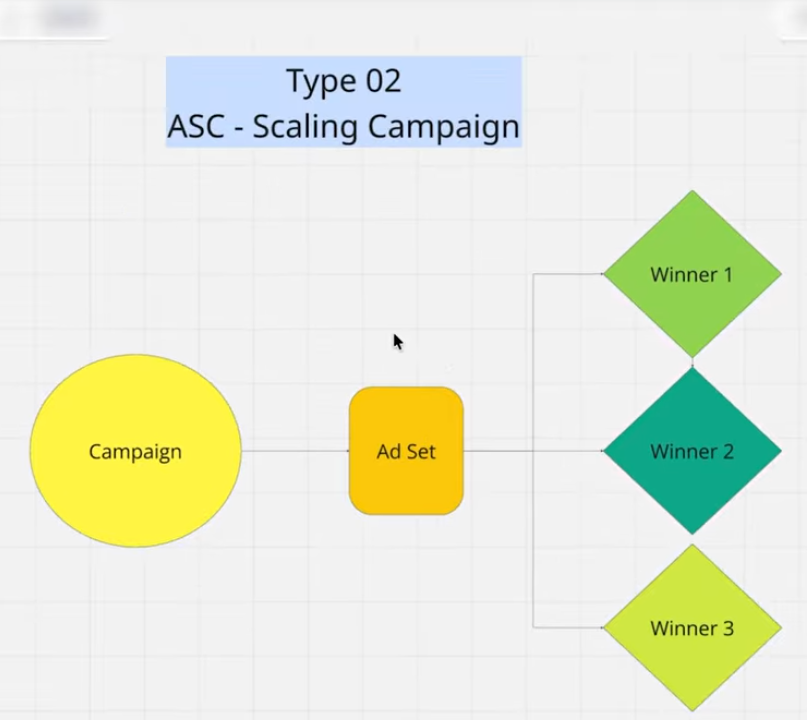
Once we identified winning creatives, we moved them into a structured scaling system using ASC (Advantage Shopping Campaign) and CBO (Campaign Budget Optimization) structures.
But scaling was not random. It was controlled using a 3-layer decision framework.
We first analyzed performance over a 7-day window to understand overall stability. If ROAS remained stable and consistent, the campaign was marked for scaling consideration.
Next, we used a 3-day analysis to decide the speed of scaling. Depending on momentum, we increased budgets by 5%, 10%, 20%, or sometimes 25%.
Finally, we used a 1-day check as a confidence layer. If the latest performance supported the trend, we proceeded with scaling.
This system ensured that scaling decisions were never emotional. Everything was backed by structured data.
The Daily Optimization Habit That Protected Profitability
One of the most important habits in this system was daily optimization.
Every day between 10:00 AM and 10:30 AM, we reviewed all campaigns. During this time, weak ads were paused, winning ads were scaled, and budgets were adjusted based on performance.
This daily routine prevented unnecessary ad spend leakage and ensured that the account always remained optimized.
It also helped maintain stable ROAS even during aggressive scaling phases.
Why Video Creatives Became the Growth Driver
Initially, static ads performed well during testing. But over time, we observed a clear shift.
Video creatives started performing more consistently and delivered better engagement and trust. They helped explain product benefits more clearly and improved conversion rates.
As a result, we shifted focus toward increasing video production while reducing dependency on static creatives.
This change improved both stability and scalability.
The Final Campaign Structure We Used
After multiple iterations, the entire Meta Ads system was simplified into three clear layers.
The first layer was the testing campaign, where all new creatives were tested under broad targeting with low budgets.
The second layer was the scaling campaign, where only winning creatives were moved into ASC or CBO structures with higher budgets.
The third layer was the retargeting campaign, which focused on warm audiences like website visitors and add-to-cart users to improve conversions.
This simple structure replaced all complexity and made scaling predictable.
Final Outcome: ₹50L to ₹75L Profitable Scale
After implementing this system, Dharishah Ayurveda successfully moved from a stable ₹50 lakh revenue range to ₹75 lakh monthly revenue with profitability intact.
Meta Ads became more efficient, ROAS stabilized around healthy levels, and ad spend wastage reduced significantly.
More importantly, the brand was no longer dependent on a few winning ads. A system was built that could consistently produce and scale new winners.
Key Takeaways for D2C Founders and Marketers
The most important learning from this journey is simple.
Creative is the real targeting. If your content is strong, Meta will automatically find the right audience.
Testing systems are non-negotiable. Without structured testing, scaling becomes guesswork.
Scaling should always be gradual and data-driven. Aggressive scaling destroys performance.
Finally, simplicity wins. You do not need complex funnels or over-engineered strategies. You need a system that tests fast, learns fast, and scales only what works.
Conclusion
The growth of Dharishah Ayurveda from ₹50L to ₹75L was not driven by hacks or shortcuts. It was driven by discipline, structure, and consistent execution.
If your brand is stuck at a revenue plateau, the real solution is not more ad spend. The real solution is a better creative system and a more disciplined scaling process.
If you want to implement this exact system for your brand, you can book a strategy call with us and we’ll help you identify what’s blocking your scale and how to fix it step-by-step.