
← All client stories D2C Growth
How BioPods went from zero ad history to a repeatable Meta Ads growth system
At a glance
- Client
- BioPods
- Category
- Triple-chamber laundry pods · D2C home care
- Market
- India
- Engagement
- Meta Ads launch, creative testing and controlled scaling
- Starting point
- New product, no proven ad history and limited conversion data
A strong product with no proven acquisition formula
BioPods entered the Indian market with a relatively new laundry-care product and no established Meta Ads history. The challenge was not simply to spend more. It was to learn which audience, message and creative could consistently generate purchases.
- No historical Meta Ads performance data
- No proven audience or messaging angle
- Limited conversion data for scaling decisions
- No clear winning creative at the start
The first objective was to generate enough conversions to establish a reliable baseline and bring the account close to marketing break-even.

Before
- No established ad-account history
- Limited customer and conversion data
- No validated message or creative angle
- Scaling risked spending faster than learning
After
- First-month baseline established at 1.03X ROAS
- Creative testing became the growth engine
- UGC, demos and new hooks tested continuously
- 20–25 content pieces produced every month
Build the learning engine before forcing the scale
Instead of depending on one or two ads, we used a continuous testing system. The goal was to understand what helped a new customer notice the problem, understand the product and complete a purchase.

Establish a conversion baseline
The first campaigns focused on producing enough purchase data to understand whether BioPods could acquire customers close to marketing break-even.
Turn customer questions into creative angles
We tested hooks around convenience, messy detergent routines, one-pod simplicity, product demonstrations and different customer profiles instead of relying on a single campaign idea.


Evaluate creatives on purchases, not engagement
Each concept was judged using purchase volume, purchase ROAS and funnel metrics. High engagement alone was not treated as proof that an ad deserved more budget.
Maintain creative velocity
The team produced 20–25 new content pieces each month, giving the account a steady supply of hooks, demonstrations, profiles and conversion-focused concepts.

More budget exposed the next bottleneck: stronger creative
The first month validated that the product could acquire customers close to marketing break-even. The next objective was to move from roughly ₹1 lakh towards ₹2 lakhs in spend without losing efficiency.
The screenshots show two important scaling signals. The top-spend ad shown used ₹172,382.39 at 1.18 purchase ROAS, while the ASC winners campaign used ₹235,546.46 at 1.22 purchase ROAS. Sales continued, but the efficiency was not strong enough to treat budget increases as the only growth lever.
The account did not need a blind budget increase. It needed stronger creatives, clearer product communication and more conversion data before the next scaling push.

Data note: the screenshots show different account views and reporting cuts, including month, campaign and ad-level data. Figures are labelled according to the visible row in each screenshot rather than being combined into one unsupported claim.
What D2C founders can take from this
The 4 moves that built the foundation:
Break-even can be a first-month win.
For a new product with no conversion history, a near break-even baseline creates real data for the next decision.
Budget cannot rescue weak creative.
Scaling spend magnifies the current economics. It does not automatically improve customer understanding or intent.
Creative velocity builds the learning loop.
A steady flow of 20–25 new pieces gives the account more chances to discover hooks that can support scale.
Scale what purchase data validates.
Purchase volume, ROAS and funnel quality should decide where the next rupee goes.
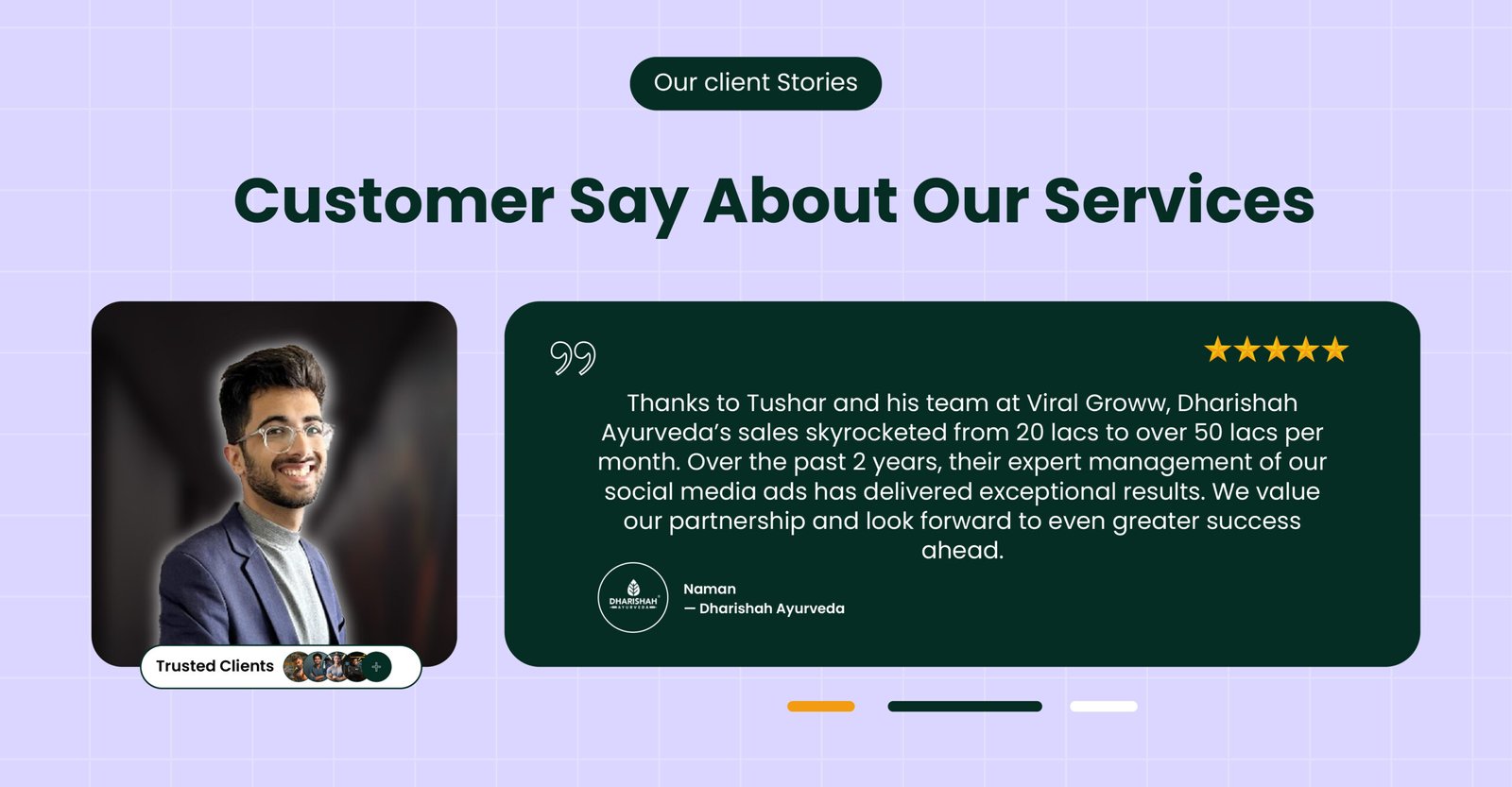
Scaling Dharishah Ayurveda to ₹50 Lakhs in Monthly Sales
Explore case study
How We Helped a Skincare D2C Brand Scale in 2 Months
Explore case study
How Lachi Broke Its Revenue Ceiling and Scaled Beyond ₹40 Lakhs
Explore case studyBuild the system first. Then scale what works.
Book a free strategy call. We'll review your offer, creative pipeline and account data to show you what must be validated before the next budget increase.
Book Your Free Strategy CallNo contracts. No obligation. If we're not the right fit, we'll tell you on the call.