What Is the Google June 2026 Spam Update?
If you have noticed a sudden drop in your organic traffic or your website rankings have shifted in the past few weeks, there is a good chance the Google June 2026 Spam Update played a role in that. Google rolls out spam updates several times a year, and this latest one is one of the more significant ones in recent memory.
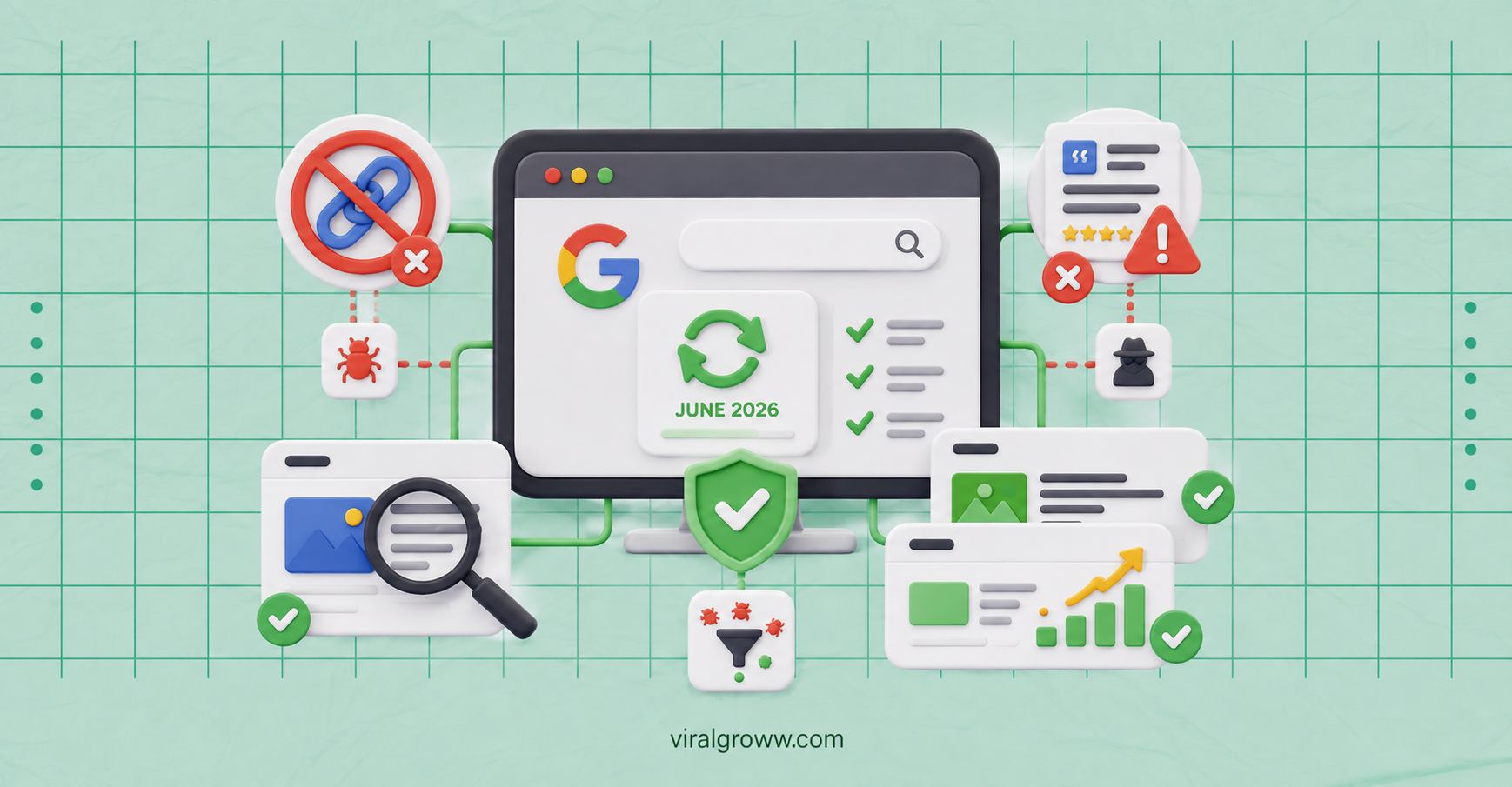
The Google spam update 2026 is a broad algorithmic and manual action push that targets websites breaking Google’s spam policies. These are sites that try to game search rankings through deceptive content, manipulative links, or by exploiting loopholes in how Google evaluates pages.
Google officially confirmed the rollout of this update in June 2026. As with previous spam updates, the rollout took several days to fully complete, and the effects were felt across multiple industries — from eCommerce and affiliate websites to news blogs and local business pages.
This update is not about penalizing websites for minor mistakes. It specifically goes after those that are intentionally trying to manipulate search results in ways that go against Google’s guidelines. However, many legitimate websites also get caught in the crossfire, especially if they unknowingly follow practices that are now considered spammy.
Whether you are a small business owner managing your own site or a digital marketing team handling multiple client websites, understanding what this update means is the first step to protecting your rankings.
Why Google Keeps Rolling Out Spam Updates ?
Google’s search engine processes billions of queries every day. Its primary job is to show users the most helpful, accurate, and trustworthy results possible. When spammy websites manage to rank high in search results, it damages that experience.
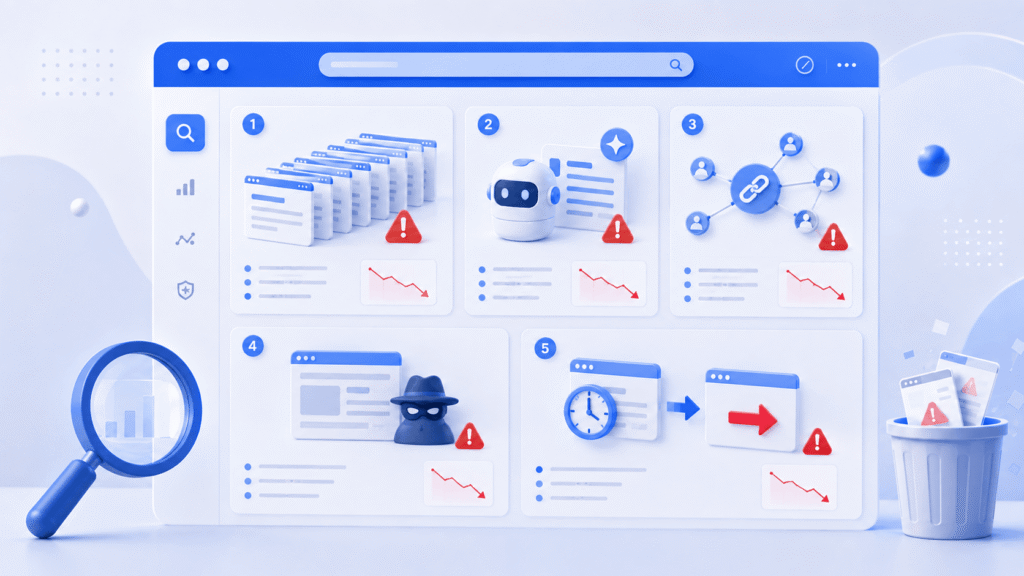
Over the years, spammers have found increasingly creative ways to fool Google’s algorithms. They create low-quality content at scale, build fake backlinks, abuse editorial sections of trusted websites, and exploit expired domains with strong backlink profiles. As these tactics evolve, Google has to keep updating its systems to stay ahead.
The June 2026 Google update is Google’s way of saying: our systems have gotten better at detecting these tactics, and websites using them will be demoted or removed from search results.
This is also tied to the broader rise of AI-generated content SEO concerns. As AI tools have become widely available, some website owners started using them to produce thousands of pages of low-value content purely to rank for keywords. Google has made it very clear that using AI for content is not inherently wrong, but using it to produce unhelpful, repetitive, or deceptive content at scale is a direct violation of its spam policies.
According to Google’s own documentation: “Spammy automatically generated content is content that’s been generated programmatically without producing anything original or adding sufficient value.”
What the June 2026 Update Targets ?
Let’s break down the specific practices this update goes after. Understanding these will help you figure out whether your site might be affected and what to fix.
Scaled Content Abuse
Scaled content abuse refers to the practice of generating a large number of pages — often with AI tools or automated systems — that offer very little value to users. These pages are designed to rank for many keywords, but they don’t actually help anyone.
Examples of scaled content abuse include:
- Thin affiliate pages with no original review or analysis
- Auto-generated product description pages copied from manufacturer specs
- Keyword-stuffed articles that repeat the same information across hundreds of URLs
- AI-generated blog posts that are published in bulk without any human editing, fact-checking, or added perspective
If your website has thousands of pages that were created quickly and offer little unique value, this update may have affected your rankings. Google is getting much better at identifying when content is created for search engines rather than for people.
What to do: Audit your content. Identify pages with low traffic, thin content, or duplicate information. Either consolidate them, add meaningful detail, or remove them entirely if they serve no purpose.
AI-Generated Content Used to Manipulate Rankings
This deserves a section of its own because it has been one of the most talked-about issues since AI writing tools became mainstream. The Google spam policy is not anti-AI. Google’s stance is that the purpose and quality of the content matters, not the tool used to create it.
However, when AI content is used specifically to:
- Flood a website with keyword-targeted pages
- Create misleading or inaccurate content
- Produce content that lacks original insight or genuine helpfulness
…then it crosses into spam territory.
The June 2026 update appears to have refined Google’s detection systems to better identify AI content that lacks E-E-A-T (Experience, Expertise, Authoritativeness, and Trustworthiness). If you are publishing AI-generated content that has no author attribution, no first-hand experience, and no real value for the reader, this update may have hit you hard.
What to do: Use AI as a starting point, not the final product. Add your own experience, data, examples, and perspective. Every piece of content should serve the reader first.
Manipulative Link Building Practices
Manipulative link building has been a target of Google for years, but the June 2026 spam update appears to have sharpened the focus on link schemes that are harder to detect. These include:
- Private Blog Networks (PBNs): A network of websites created solely to pass link authority to a target site
- Paid links without proper disclosure: Buying links from websites without the rel=”sponsored” tag
- Link exchanges: “I’ll link to you if you link to me” arrangements that have nothing to do with editorial value
- Footer or sidebar links injected across hundreds of sites
- Comment spam links: Low-quality forum or blog comment links pointing to your site
- Guest post link farms: Publishing generic content on irrelevant sites just to get a backlink
If your site’s backlink profile has a large number of low-quality, irrelevant, or clearly artificial links, this update may have flagged your site.
🔗 Read more: Google’s Link Spam Guidelines
Site Reputation Abuse
Site reputation abuse is a newer category that Google introduced in its spam policies in 2024 and has continued to enforce more aggressively since. This happens when a trusted website — one with a good domain authority — hosts content from third parties that is low-quality, irrelevant, or purely designed to pass SEO value to other sites.
A common example: A well-known news website or educational platform opens a section where anyone can publish content (like a sponsored or partner section), and that section becomes filled with keyword-stuffed articles, gambling content, financial spam, or product-focused affiliate articles that have nothing to do with the core website.
Google’s concern here is that these third-party pages are benefiting from the parent domain’s trustworthiness even though they don’t reflect its actual quality or editorial standards.
What to do: If you run a website that allows third-party content contributions, implement a strong editorial review process. Ensure all content published under your domain reflects your standards and relevance. Use noindex or proper rel tags for sections that are not meant to rank.
Expired Domain Abuse
Expired domain abuse is the practice of buying domains that have already built up strong backlink profiles over the years, and then redirecting them or repurposing them to pass SEO authority to a new website — without putting in any genuine effort to rebuild the site’s content.
This is a common tactic in the grey-hat SEO world. Someone finds an expired domain that used to be a respected educational or government-linked website, buys it cheaply, redirects it to a commercial page, and tries to benefit from years of legitimate link-building.
The June 2026 Google update has reportedly become much better at identifying these redirects and discounting the link equity they pass, especially when:
- The redirected content has nothing to do with the original domain’s purpose
- The domain was repurposed purely for link-passing purposes
- There is no real content or business behind the domain
What to do: If you have purchased expired domains for your SEO strategy, evaluate whether you are providing genuine value through those domains or just trying to pass link juice. The latter is increasingly risky.
How to Know If Your Site Was Hit ?
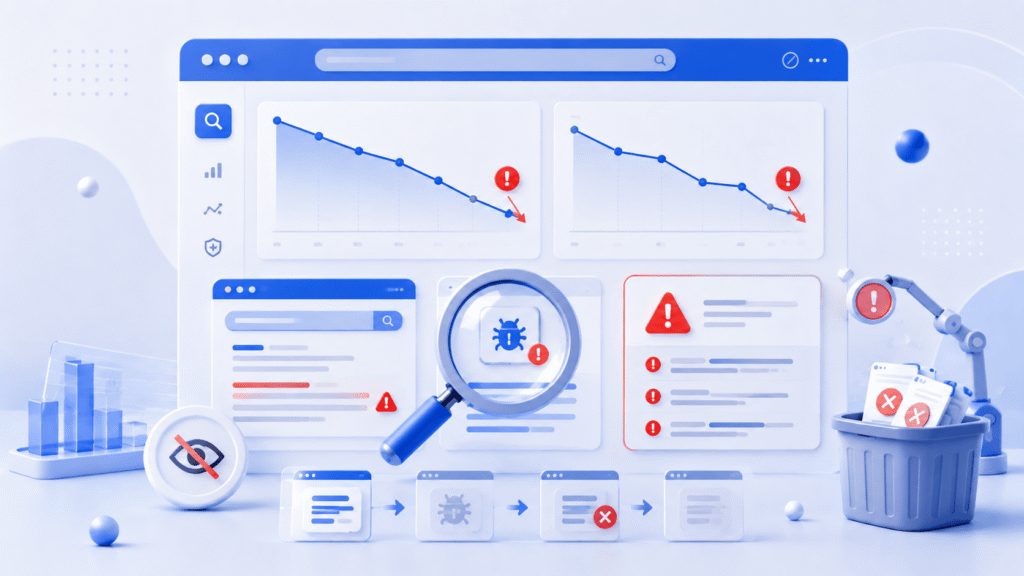
Not every drop in traffic is caused by a Google spam update. But here are clear signs that the June 2026 Google update may have affected your website:
- Sudden drop in organic traffic (check Google Search Console and Google Analytics for the period around the update rollout)
- Specific pages lost rankings significantly — especially pages with AI-generated or thin content
- Manual action notice in Google Search Console under Security & Manual Actions
- Drop in impressions even if clicks haven’t dropped dramatically yet — this is often an early signal
- Loss of featured snippets or rich results on pages you previously held
- Pages deindexed or removed from Google’s search results entirely
To check properly, go to:
- Google Search Console → Performance → Search Results — filter by date to compare before and after the update
- Google Search Console → Security & Manual Actions — check if Google has issued a manual penalty
- Google Analytics → Traffic Acquisition — filter for organic search and look for unusual drops
Steps to Recover from the June 2026 Google Update

Recovery from a Google spam update is possible, but it takes time and genuine effort. Here is a step-by-step approach:
Step 1: Identify What Changed
Use Google Search Console and tools like Ahrefs or Semrush to identify exactly which pages lost rankings and when. This helps you narrow down what type of content or links may have triggered the drop.
Step 2: Audit Your Content
Go through your website and honestly evaluate each piece of content. Ask:
- Does this page genuinely help someone?
- Is it based on real experience or just keyword research?
- Is the information accurate and up to date?
- Does it offer something that other similar pages don’t?
Pages that fail these questions should be improved, consolidated, or removed.
Step 3: Fix or Remove Thin and Duplicate Content
Identify pages that are too short, too generic, or near-duplicates of other pages on your site. Use canonical tags for legitimate duplicate content, and use 301 redirects to consolidate pages that cover similar topics.
Step 4: Clean Up Your Backlink Profile
This is critical. Run a full backlink audit (see section 6 below) and disavow links that are clearly spammy or manipulative.
Step 5: Submit a Reconsideration Request (If You Have a Manual Action)
If Google has issued a manual spam action against your site, you will need to fix the issues and then submit a Reconsideration Request through Google Search Console. This process takes time — sometimes several weeks — but it is the only formal path to getting a manual penalty lifted.
Step 6: Be Patient
Algorithmic recovery from a spam update does not happen overnight. After you make genuine improvements, it can take several weeks to a few months for Google to re-crawl and re-evaluate your site. Keep monitoring your metrics.
How to Do a Proper Backlink Audit ?
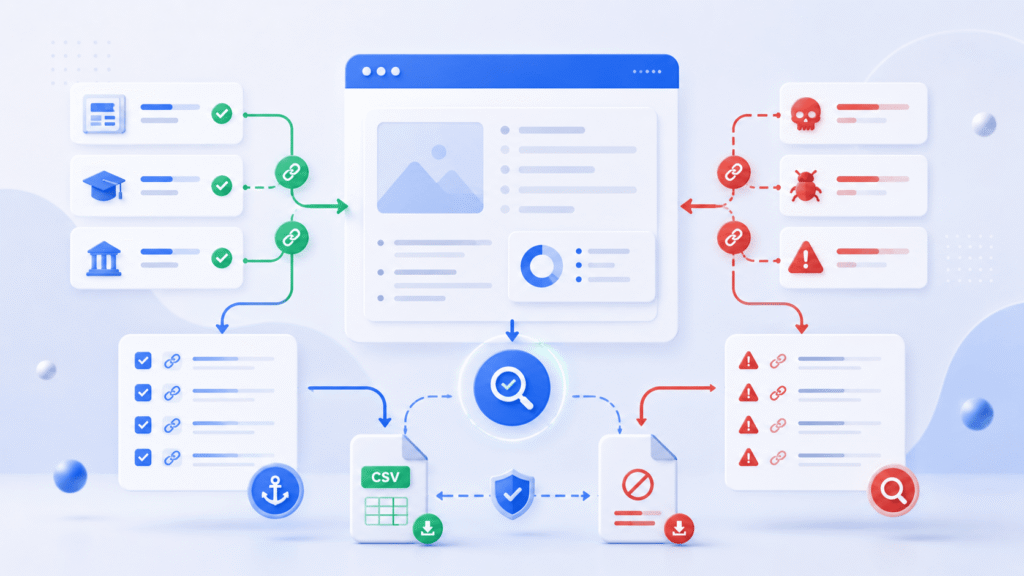
A backlink audit is one of the most important steps after any Google spam update. Here is a simple process:
Tools You Will Need:
- Google Search Console (free)
- Ahrefs or Semrush (paid, but worth it)
- Google’s Disavow Tool (accessible through Search Console)
The Audit Process:
- Export your full backlink list from Ahrefs or Semrush
- Filter for low-quality signals: Look for links from sites with very low Domain Authority, irrelevant niches, foreign-language spam sites, or known PBN networks
- Check for patterns: A sudden spike in new backlinks from unrelated sites is a red flag
- Look at anchor text: An unnatural concentration of exact-match keyword anchor texts is a manipulation signal
- Mark suspicious links for disavowal
- Create a disavow file following Google’s format and submit it through the Google Disavow Links Tool
⚠️ Note: Only disavow links you are confident are harmful. Disavowing legitimate links can hurt your rankings.
What Google Search Console Is Telling You Right Now
Google Search Console is your most direct line of communication with Google about your website’s health. After the June 2026 spam update, here is what you should be checking regularly:
Coverage Report
Check for any increase in Excluded or Error pages. If pages that were previously indexed are now being excluded, this could be a sign that Google has re-evaluated their quality.
Performance Report
Look at impressions and clicks over time. Even if clicks are stable, a drop in impressions means Google is showing your pages to fewer people — a soft ranking signal.
Manual Actions
This is the clearest sign of a problem. A manual action means a human reviewer at Google has determined that part or all of your site violates their spam policies. Fix the issue and submit a reconsideration request.
Core Web Vitals
While not directly related to spam, poor Core Web Vitals scores combined with low content quality can compound ranking problems. Address both.
Links Report
Review your top linking sites and top linked pages. This gives you a quick snapshot of where your backlinks are coming from and which pages attract the most external attention.
What Website Owners Should Do Going Forward ?
Regardless of whether the Google June 2026 Spam Update affected your website, these are practices every website owner should follow to stay on the right side of Google’s spam policies:
Focus on Helpful Content First
Every page you publish should answer a genuine question, solve a real problem, or provide information that a specific type of user is looking for. This is the foundation of sustainable SEO.
Build Links Naturally
The best links come from people who find your content genuinely useful and share it. Focus on earning links through quality content, data-driven research, free tools, and genuine industry relationships — not buying or trading them.
Be Thoughtful With AI Content
Use AI writing tools to speed up research and drafting, but always review, edit, and add genuine value before publishing. Make sure content has proper author attribution and is backed by real knowledge or experience.
Audit Your Site Regularly
Do not wait for a Google update to find problems. Run regular content audits, backlink audits, and technical SEO reviews at least once a quarter. Catch issues before they become ranking problems.
Stay Updated on Google’s Policies
Google regularly updates its spam policies and quality guidelines. Bookmark and check these resources:
How Viral Groww Can Help You Recover and Grow ?
At Viral Groww, we work with businesses every day to help them navigate exactly these kinds of situations. Whether you have already been hit by the Google June 2026 Spam Update or you want to make sure your website is protected going forward, our team is ready to help.
Here is what we bring to the table:
SEO Audit & Recovery
We start with a detailed audit of your website — content quality, backlink profile, technical SEO, and Google Search Console data — to find exactly what is hurting your rankings and build a clear plan to fix it.
Content Strategy Built for People (and Google)
Our content team creates content that is genuinely useful, properly structured, and aligned with what your target audience is actually searching for. No keyword stuffing, no thin pages, no AI spam — just content that builds real authority over time.
Backlink Profile Cleanup
If your site has accumulated spammy or manipulative backlinks over the years, our team will run a thorough backlink audit, identify harmful links, and manage the disavowal process to protect your domain’s reputation.
Performance Marketing & eCommerce Growth
SEO is just one part of a complete digital growth strategy. We also help brands with paid performance marketing, eCommerce optimization, and conversion rate improvements — so your traffic does not just grow, it converts.
Long-Term Growth Partnership
We are not just an agency you hire for a one-time fix. At Viral Groww, we work as your long-term growth partner, continuously optimizing, testing, and improving your digital presence so you stay ahead — not just today, but months and years down the line.
💬 Ready to recover your rankings or future-proof your website?
Talk to our team at Viral Groww today →
10. Final Thoughts
The Google June 2026 Spam Update is a clear reminder that search engine optimization built on shortcuts does not last. Whether it is scaled content abuse, manipulative link building, AI-generated spam, site reputation abuse, or expired domain abuse — Google’s systems are getting better at detecting and demoting these tactics with every update.
For website owners who have been following honest, user-first SEO practices, this update is mostly good news. It levels the playing field by pushing down sites that were ranking through manipulation, giving genuine content a better chance to shine.
For those who have been hit, recovery is completely possible — but it requires an honest assessment of what went wrong, a clear plan to fix it, and the patience to let Google recognize those improvements.
Here is a quick summary of what you need to remember:
- Check Google Search Console for manual actions and traffic drops
- Audit your content and remove or improve thin, scaled, or low-value pages
- Run a full backlink audit and disavow harmful links
- Stop relying on AI-generated content without genuine human review and added value
- Build links through real relationships and genuinely helpful content
- Monitor your website regularly — do not wait for the next update to find problems
- Work with an experienced SEO team if you are unsure where to start
The websites that survive and grow through algorithm updates are the ones built on a foundation of genuine helpfulness, trust, and quality. That has always been what Google is trying to reward, and the June 2026 Google update reinforces that message once again.
If you need expert help navigating this update or building a website that consistently performs well in search, Viral Groww is here to help. Reach out today and let’s build something that lasts.
Have questions about how the Google June 2026 Spam Update may have affected your website? Drop a comment below or contact the Viral Groww team directly — we are happy to take a look.