Introduction
When we started working with Beyond The Sugar, the objective was not aggressive scaling. The focus was to stabilize Meta Ads performance and gradually improve ROAS through a structured and disciplined approach.
The ad account was in its early stage with no historical data. The entire strategy was focused solely on website purchase conversion campaigns.
Instead of making frequent changes to campaign structure, we focused on:
- Creative iteration
- Messaging alignment
- Pixel learning stability
Within just 4 weeks, the account improved from approximately 1X ROAS to 1.87X ROAS, driven purely by systematic testing and optimization.
Campaign Objective
The campaign goal was simple and clear:
Improve purchase performance through Meta Ads.
There was no focus on:
- traffic campaigns
- engagement campaigns
Everything was optimized only for conversion performance improvement.
The strategy followed a structured approach:
Test → Learn → Optimize → Strengthen Signals
This helped create a stable performance foundation before scaling decisions.
Campaign Results: Week-by-Week Growth
Since this was a completely new ad account, early testing results were expected to be moderate. But what mattered most was improvement speed.
Here’s how performance progressed.
Week 1 Performance
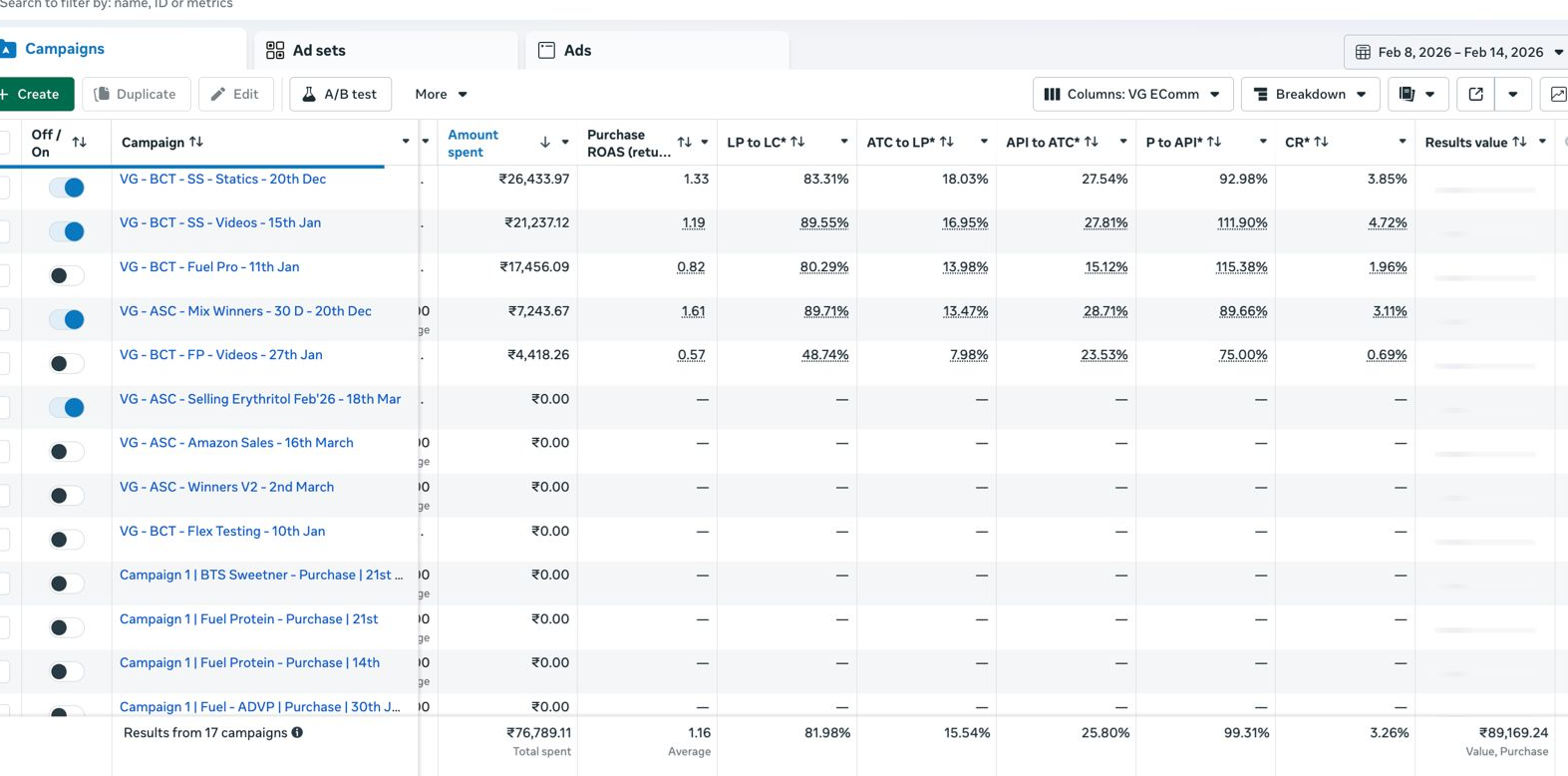
During the first week of the campaign, we spent approximately ₹67,000 on Meta Ads and achieved a ROAS of 0.95x. This phase was mainly focused on learning rather than immediate profitability.
Since the account was new and had no past advertising data, the Meta pixel was still in its early learning stage and started understanding audience behavior, engagement patterns, and purchase intent signals. At the same time, we began identifying early creative performance trends, which helped us understand which messaging angles were starting to resonate with the target audience.
Week 2 Performance
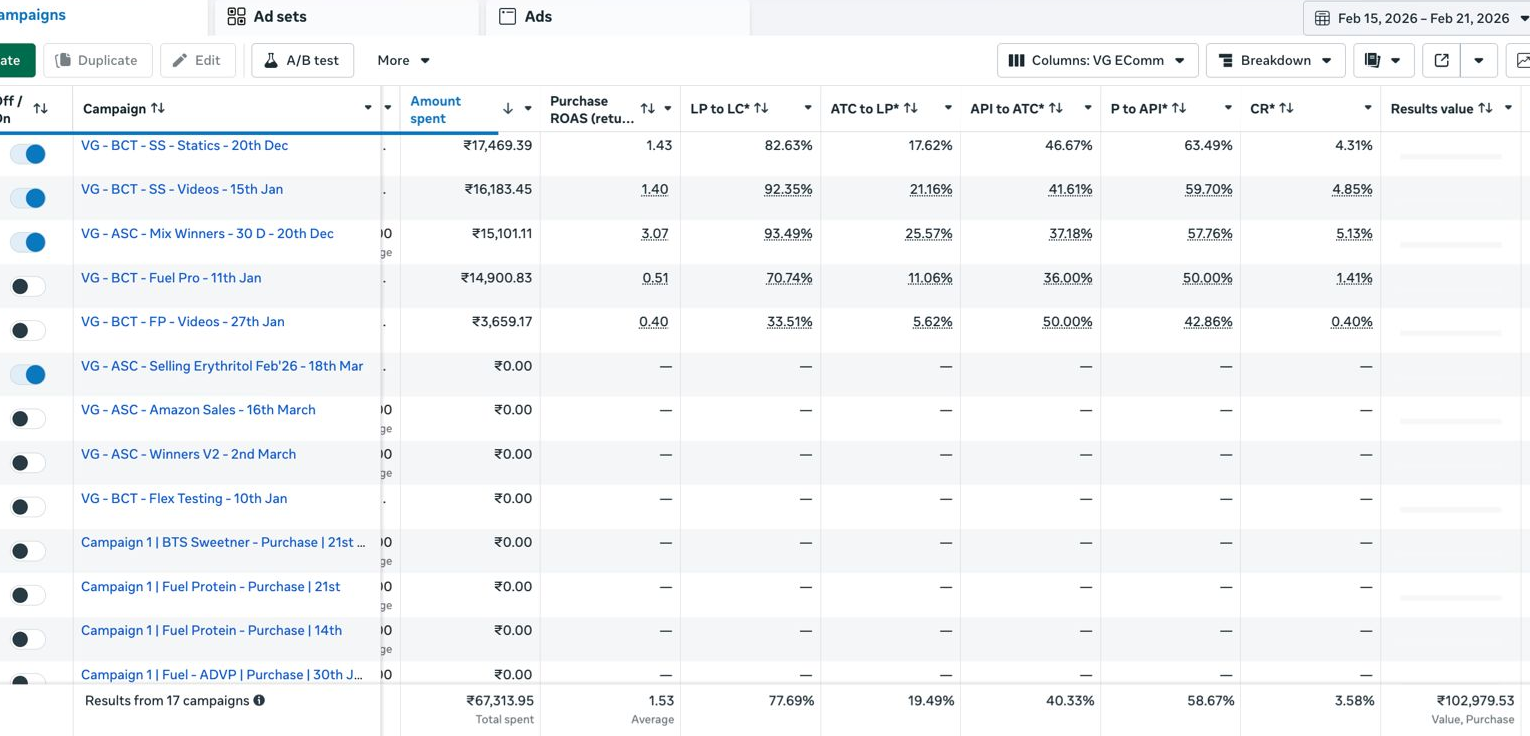
In the second week, we increased the ad spend to around ₹76,000 and the campaign performance improved to a ROAS of 1.16x. This showed that the learning from the first week was beginning to translate into better delivery and optimization. Audience response became clearer, and we started seeing stronger engagement from more relevant users. The creative direction also began stabilizing during this phase, as we were able to identify which types of visuals and messaging formats were performing better compared to others.
Week 3 Performance
With improved signals already visible in Week 2, we continued refining the campaign instead of changing direction.
Week 3 Performance
- Ad Spend: ₹64,000
- ROAS: 1.87X
This improvement came from reinforcing what was already working.
Optimization actions during this phase:
- prioritizing best-performing creatives
- pausing weak variations
- improving hook clarity
- strengthening audience-message alignment
This helped the pixel move toward stronger purchase prediction accuracy.
Week 4 Performance
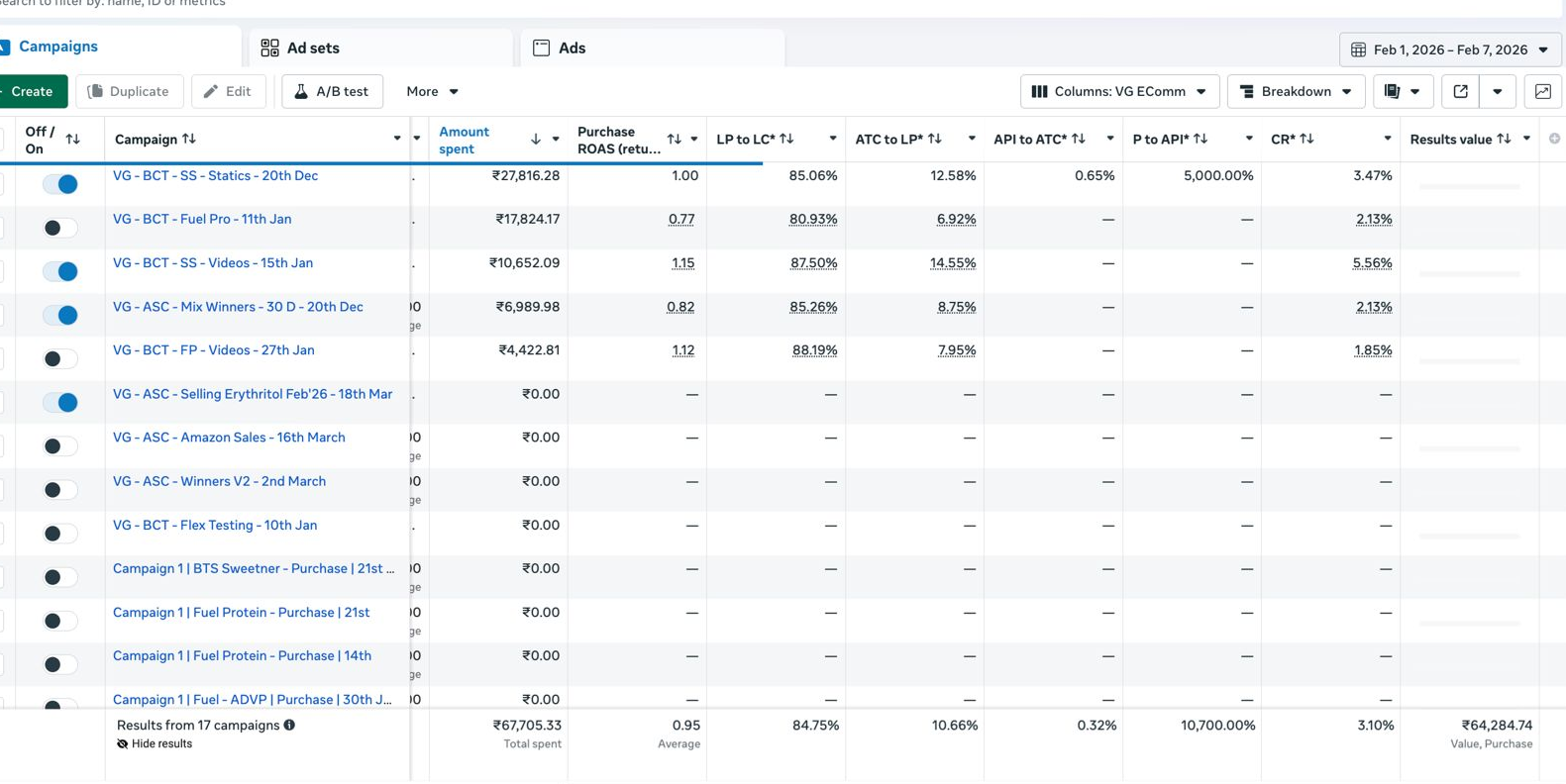
By the fourth week, we spent approximately ₹67,000 and achieved a ROAS of 1.53x, which marked a strong improvement from the earlier testing phase. At this stage, the campaigns moved into a positive return zone, which is a very strong result for a brand-new ad account with no previous advertising history. More importantly, this phase helped us clearly identify the winning creatives that were responsible for the performance growth. These insights later became the foundation for further optimization and scaling in the next phase of the campaign strategy.
Why Creative Testing Was the Core Growth Driver
The improvement in campaign performance did not come from increasing budgets or changing campaign objectives.
It came from structured creative testing.
Instead of introducing major structural changes, we focused on improving communication quality inside ads.
Creative improvements included:
- testing multiple visual angles
- improving hook delivery
- strengthening value positioning
- aligning messaging with buyer expectations
Each iteration improved signal clarity inside Meta’s learning system.
Creative Testing Framework Used
We followed a structured creative workflow instead of random experimentation.
Step 1: Understanding the Ideal Customer
We identified:
- customer expectations
- trust triggers
- hesitation points before purchase
- motivation behind product selection
This helped shape communication strategy.
Step 2: Hook Optimization
The first few seconds of a creative determine engagement quality.
So we improved:
- opening message strength
- visual attention capture
- problem recognition speed
This increased interaction quality.
Step 3: Message Positioning Improvement
Instead of generic product messaging, we aligned creatives with:
- buyer concerns
- product value clarity
- purchase motivation triggers
This helped improve conversion signals.
Step 4: Removing Weak Creatives Early
To improve budget efficiency, we paused:
- low engagement creatives
- weak CTR creatives
- low conversion performers
This allowed stronger creatives to receive more delivery.
Conclusion
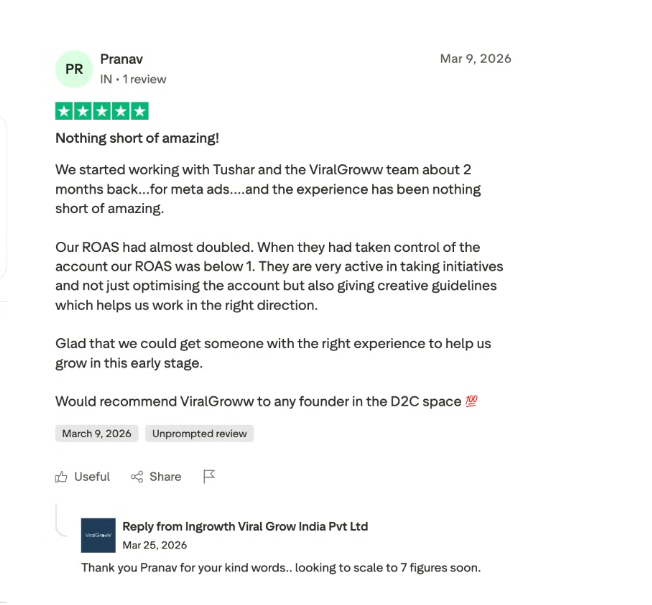
Within just 4 weeks, Beyond The Sugar’s Meta Ads performance improved from approximately 1X ROAS to 1.87X ROAS using only structured creative testing and optimization.
This case study demonstrates how consistent optimization and strong creative testing can improve Meta Ads performance even during early campaign learning phases.